

• parent keeps falling at home

My elderly parent keeps falling at home. Who do I call?

Short answer, and then the detail.

Call her GP, and call a mobile physiotherapist. In either order, this week, not next month.

The GP looks for a medical cause. Blood pressure, medication, an infection, her eyes, her ears, her heart. The physiotherapist looks at her strength, her balance, and her house. They are two different jobs and neither one waits for the other. You do not need a referral to book the physiotherapist privately, and you do not need her to have a package or an assessment or a diagnosis.

If she has fallen twice in the last twelve months, or once and could not get herself up, that is the point at which this stops being bad luck and starts being a pattern.

  • Physiotherapy
  • Occupational Therapy
  • Home Assessments
  • Assistive Equipment

Who we are

Total Health Choice is a mobile allied health team. Physiotherapy, occupational therapy, exercise physiology and speech pathology, in the person’s own home. Podiatry and massage therapy are both coming. We have been doing it across Melbourne since 2011 and there are fifty of us.

We come to Brighton 3186, Bentleigh 3204, Hampton 3188, Carnegie 3163, Chadstone 3148, Frankston 3199, Chelsea 3196, Parkdale 3195, and around thirty other Melbourne suburbs across the south east, bayside, inner suburbs, north and west. The full list with postcodes is here.

We ring back within thirty minutes on business days. Our Google rating is 4.9 from over 200 reviews.

Most first visits happen within five business days. We will give you a real date on the phone rather than “we’ll be in touch”.

Every therapist who comes to the house holds a current police check and NDIS worker screening clearance. And you get the same therapist each visit, so it is not a different stranger at the door every fortnight.

Make a Referral

First, the questions that tell you how serious this is

Answer these before you ring anyone. They are the same questions we will ask, and having the answers makes everything faster.

How many times has she actually fallen in the last twelve months?

Ask it several ways, because people underreport. Has she ended up on the floor. Has she had to grab something to stop herself going down. Has she slipped in the shower. Has she had a fall she did not mention.

Did she get herself up, or did she have to wait?

How long she was on the floor is one of the most important numbers in this whole conversation.

What time of day?

Night falls, especially on the way to the toilet, point straight at lighting, blood pressure and the path from the bed.

What was she doing?

Standing up from a chair, turning around, stepping over something, reaching up, getting out of the shower. Each one points somewhere different.

Has she stopped doing anything?

This is the question that finds the falls nobody mentioned. If she has quietly stopped going to the shops, stopped the garden, stopped having a shower unless somebody is home, something has happened.

Has anything changed in her medication in the last three months?

A new blood pressure tablet, a sleeping tablet, a new dose. This is one of the most common and most fixable causes and it belongs in front of her GP.

If she has fallen and cannot get up, right now

Do not lift her yourself. Call an ambulance on triple zero if she is hurt, cannot get up, hit her head, or is on blood thinners. A head knock on blood thinners goes to hospital even if she seems completely fine.

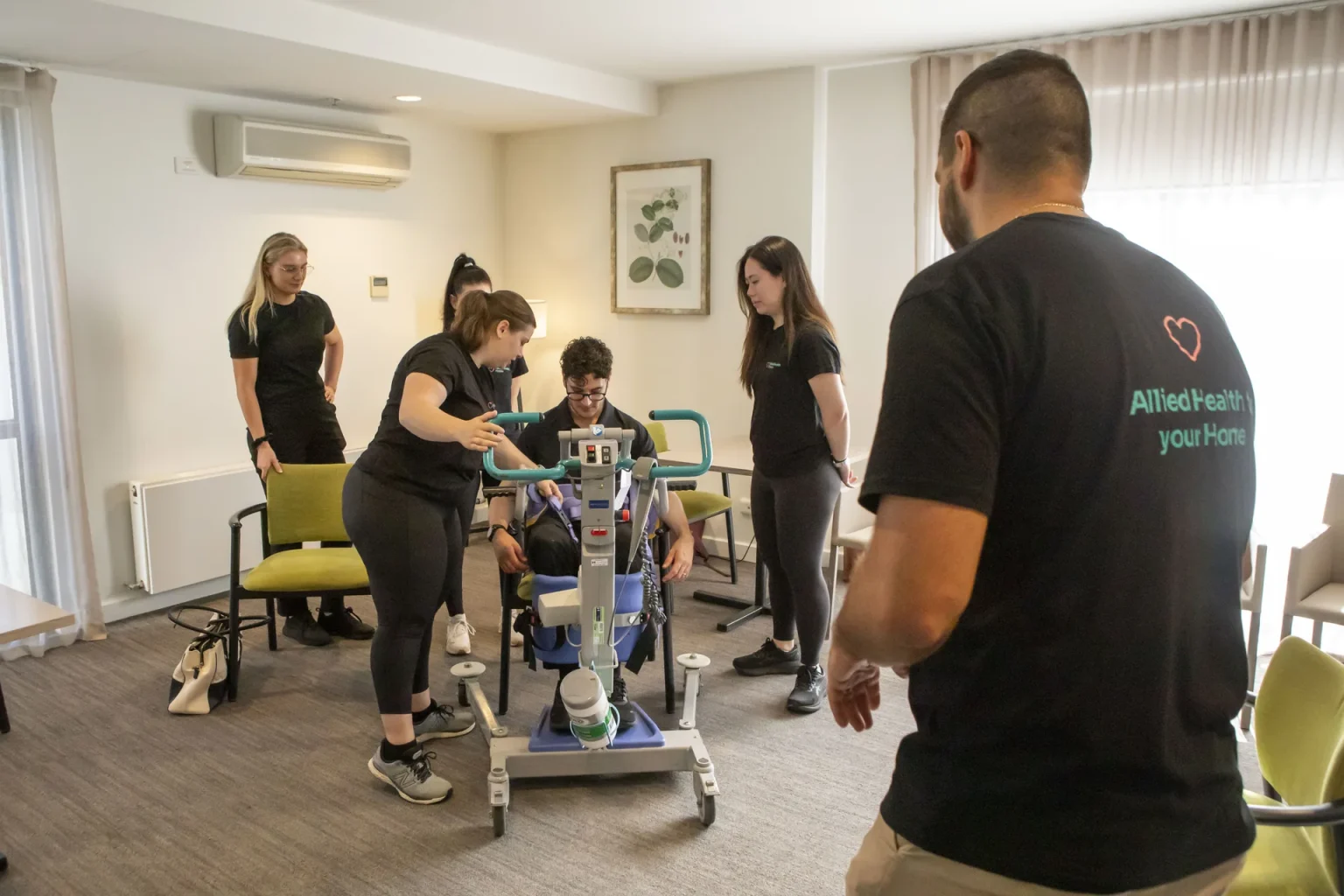
If she is not hurt and can move, there is a proper method for getting someone up off the floor using a chair, in stages. We teach it, and it is one of the first things we teach in a house where this has happened before.

What happens at a falls assessment at home

This is what an hour with our physiotherapist looks like, so you know what you are booking.

Before. Our admin team books the visit and takes the details then, including anything the therapist needs to know about getting in. You get a text confirming the date and time.

The physiotherapist, or the exercise physiologist.

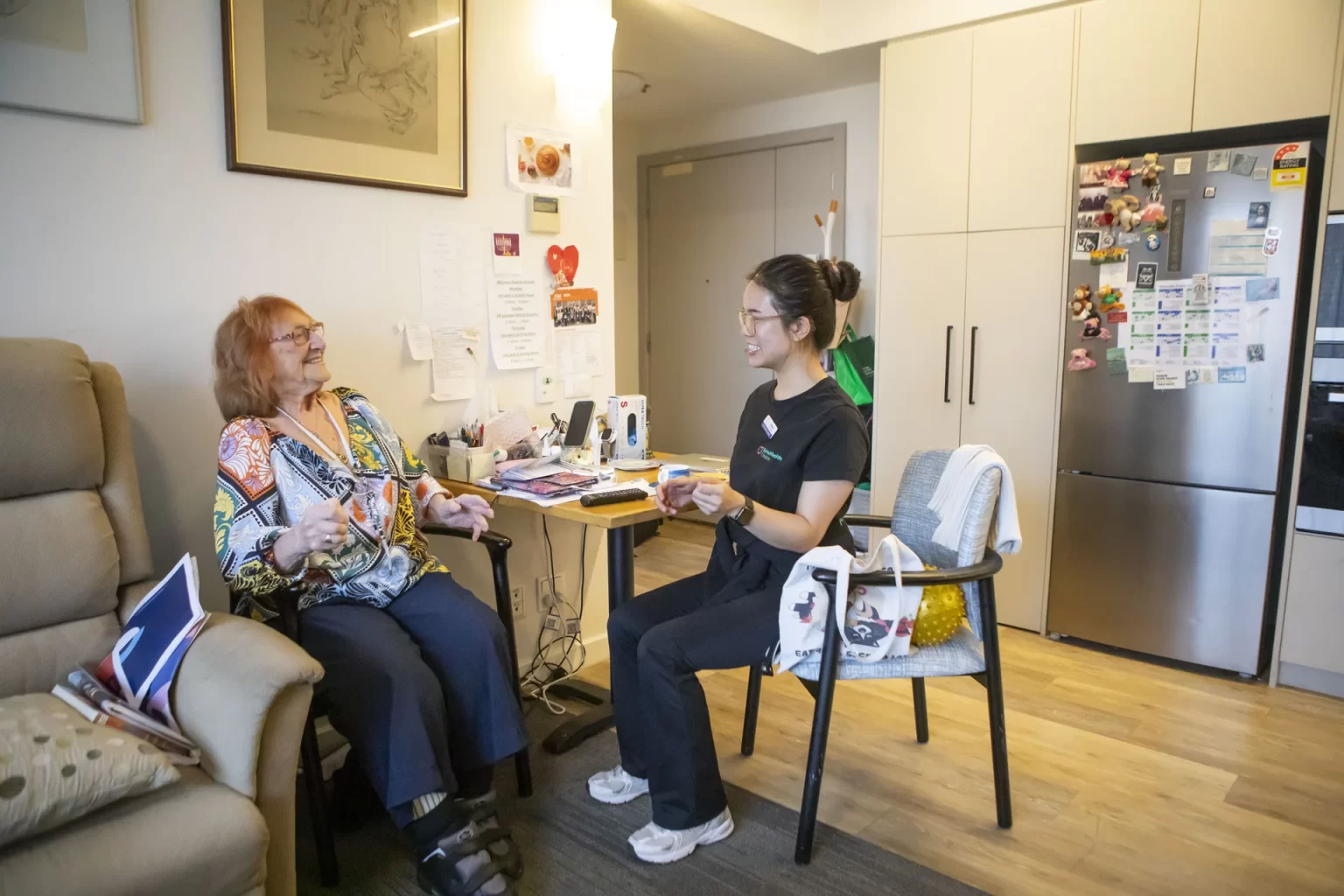
The first twenty minutes is talking. The falls, stumbles and near misses, one by one. A near miss counts, because the next one may not be. What she has stopped doing. What she is finding hard right now, in her own words.

Then we measure, and we write the numbers down.

Timed Up and Go, which is how long it takes her to get out of a chair, walk three metres, turn around and sit back down

Thirty second sit to stand, which is how many times she can stand up from a chair in thirty seconds

Four stage balance test

Walking speed over four metres

Grip strength

If she is able, whether she can get up off the floor

That is the baseline. Without it, “she seems a bit better” is the only report anyone can ever give you.

The occupational therapist.

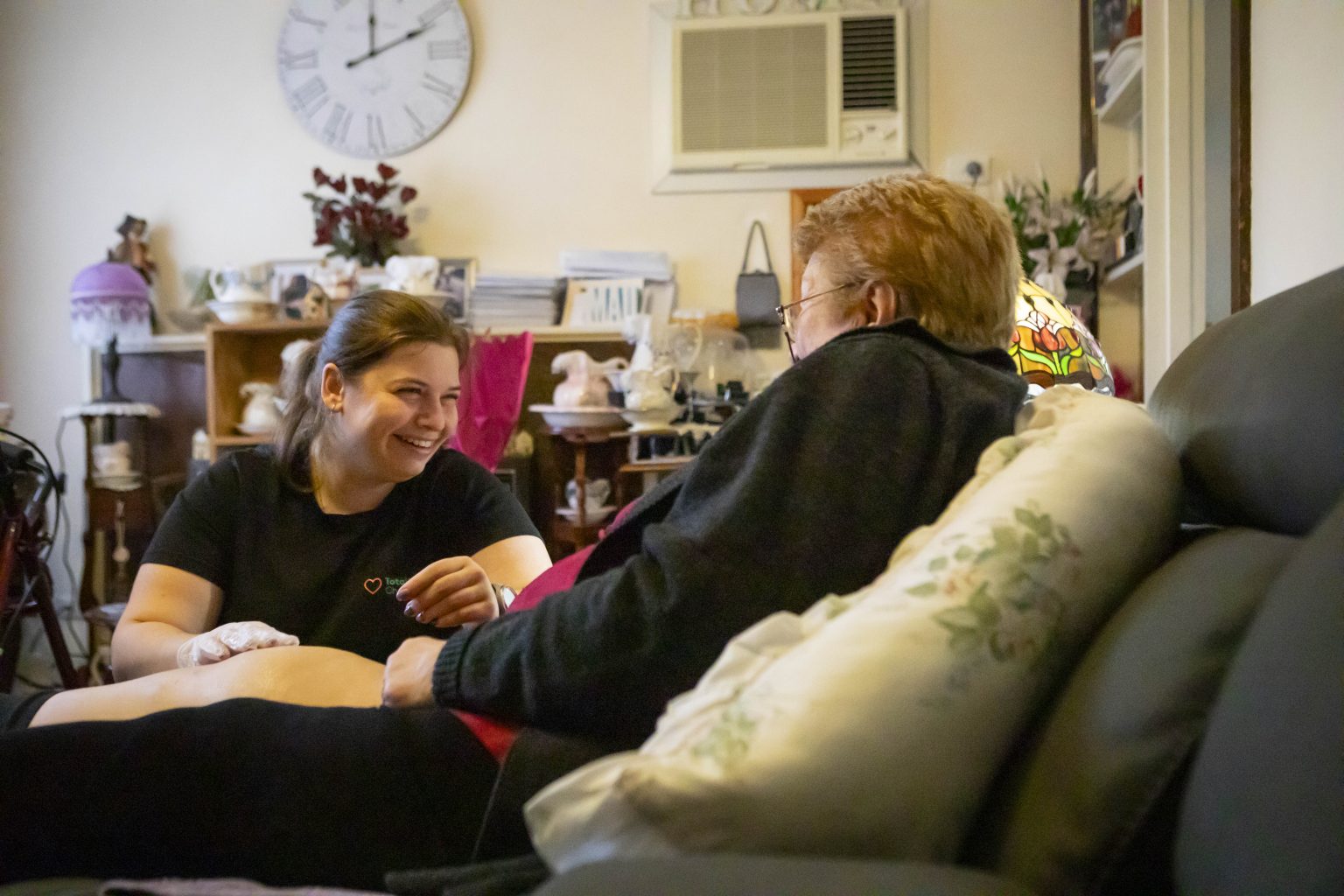
The OT walks through the house with her.

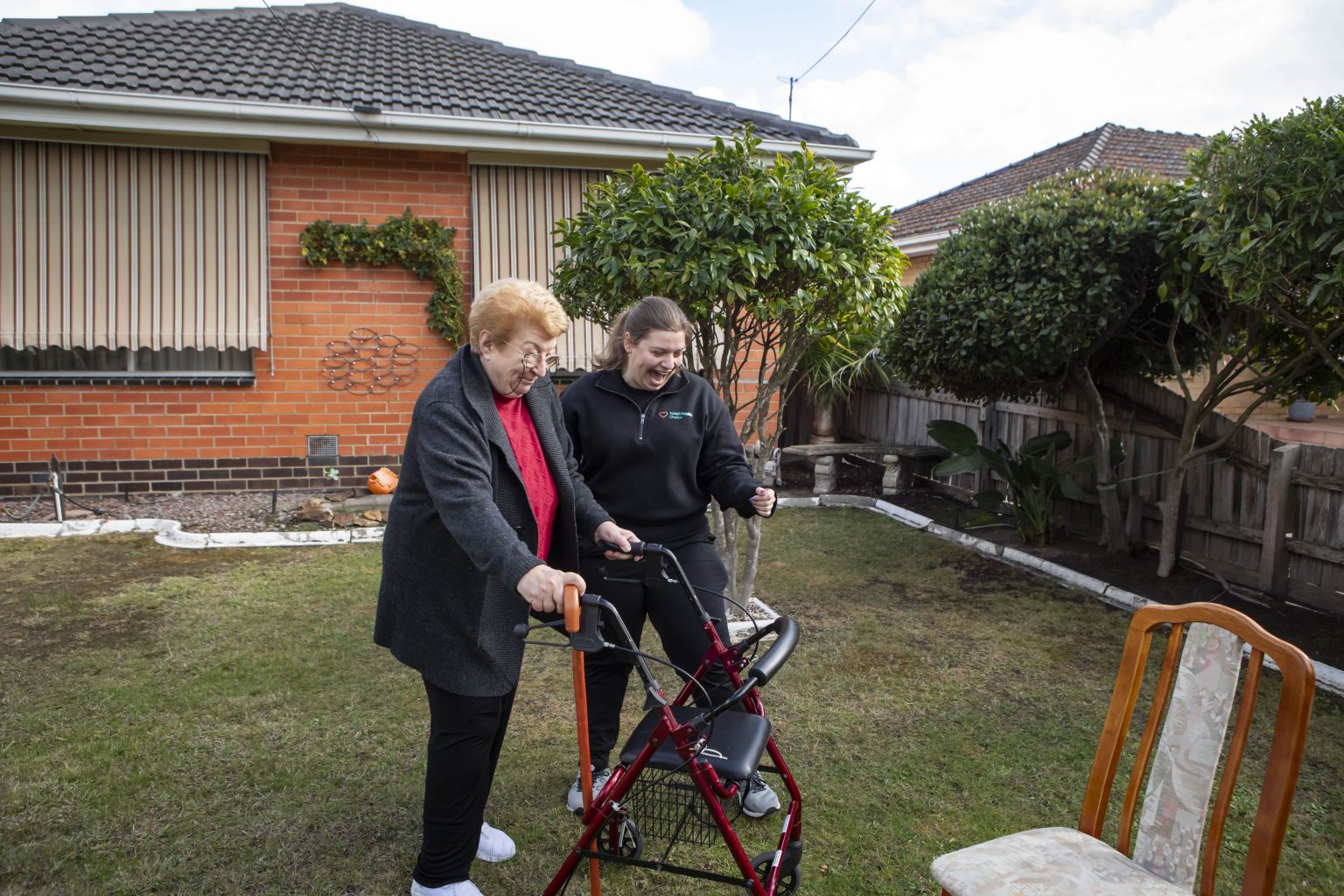
The front step and the path to the letterbox

Hallway lighting, and whether the switch is where she can reach it before she is in the dark

Rugs, cords, the mat inside the front door

The bathroom. Is there a rail. Is the shower over a bath. What does she hold onto getting in and out, because it is very often the towel rail or the shower screen and neither is built to hold a person. How does she get up off the toilet, and how high is it

The bed, and how high it sits

The kitchen, and what she reaches above her head for

The path from her bed to the toilet at two in the morning, in the dark.

In most houses this is the single most dangerous trip anyone takes, and it is the one nobody looks at

And we look at her shoes.

The ones she actually wears around the house, not the ones she shows visitors.

What you get out of it

A written plan.

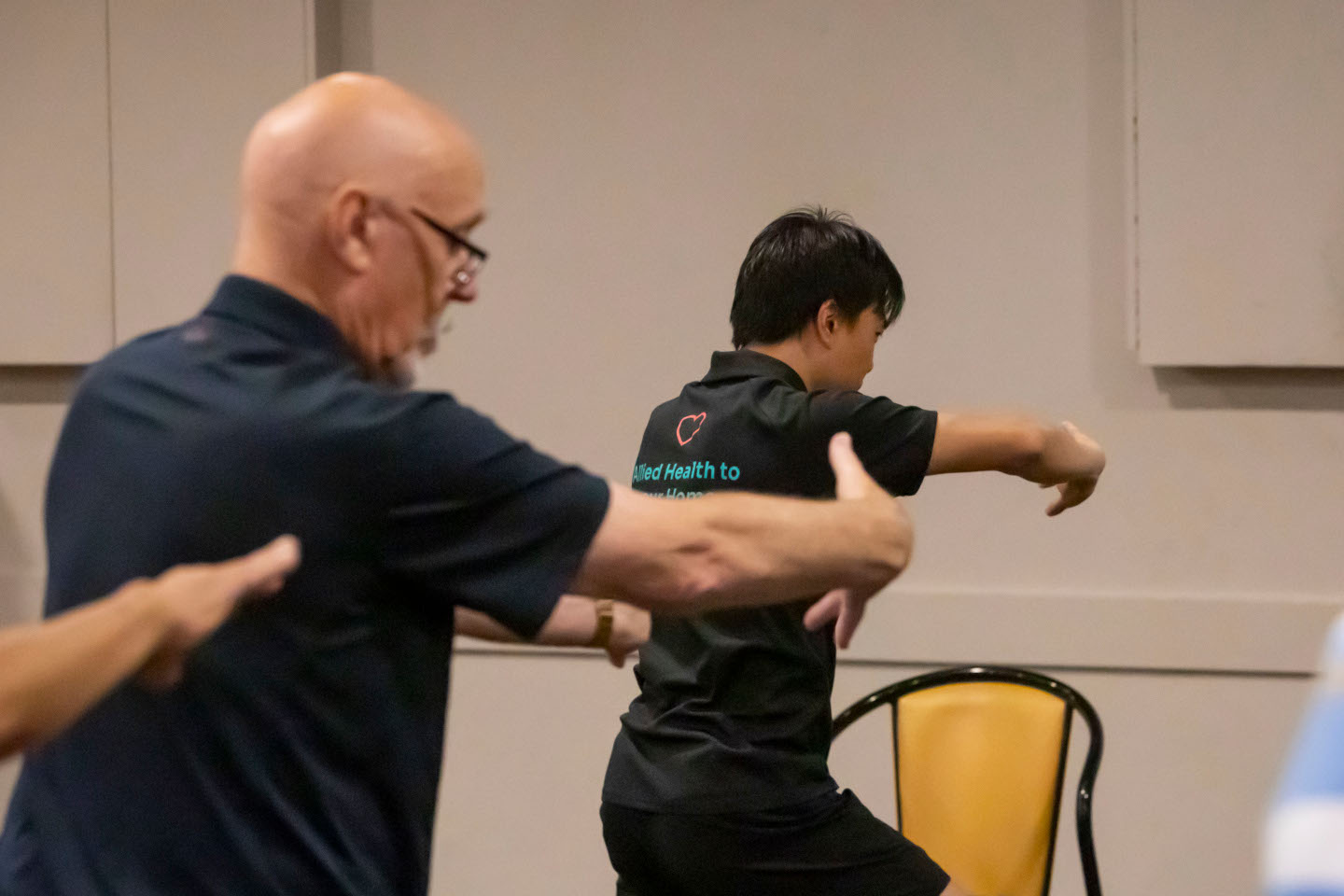
A home exercise program built around what the client can tolerate. Seated or standing exercises, near a benchtop or a chair for support, ideally five to ten minutes a few times a week, printed with photographs. Balance work hard enough to actually do something, and strength work built around the chairs and the steps in her own house. Marching on the spot does not prevent falls.

If the house needs changing, an occupational therapy visit. Rails, a shower stool, a raised toilet seat, better lighting on the night path, the bed at the right height. The OT measures, writes the recommendation with the exact height and wall position, and tells you what it costs before anything is ordered.

The same therapist each visit. Not a different face each fortnight.

And a monthly progress report to the family with the outcome measures in it. The same tests, repeated. If her sit to stand goes from six to eleven, you will see it written down. If it does not move, you will see that too, and we will tell you why rather than sending you a nice letter.

That report goes to you, to her GP, and to her Support at Home Provider if she is on a Support at Home package. If you live interstate you get it the same day everyone else does.

Explore Physiotherapy

What it costs, and who pays

If you do not know which of these applies to your mother, ring and say that. It is the most common call we take and nobody has ever been embarrassed about it.

The bit nobody talks about: she does not want help

Extremely common, and it is usually not stubbornness. Accepting a physiotherapist feels like signing something.

Three things that work.

  • Do not lead with falls. “Someone’s coming to help you get stronger so you can keep doing the garden” gets a very different answer to “someone’s coming because you keep falling.”
  • Be there for the first visit if you possibly can. It changes the whole tone.
  • Tell us on the phone that she is reluctant. The therapist will run the visit differently, more slowly, with less clipboard.
Explore Occupational Therapy
  • Helpful information

Questions people ask us about falls

Her GP, for the medical causes, and a mobile physiotherapist, for the strength, the balance and the house. Both this week. You do not need a referral to book a physiotherapist privately, and we come to her.

Two in twelve months, or one where she could not get herself up. That is the point at which the next one becomes likely rather than unlucky.

Yes. The fall without an injury is the free warning. The next one is the one that breaks a hip, and about a third of people who break a hip never get back to where they were.

We come to the house. That is the whole business, and it has been since 2011.

Most first visits happen within five business days. We will give you a real date on the phone, and we contact you within thirty minutes on business days.

Every therapist who comes to the house holds a current police check and NDIS worker screening clearance. You get the same therapist each visit rather than a different face each fortnight, and you get a text confirming the date and time, so your mother knows who is coming and when.

Not for private. You can start now and sort funding out afterwards, and plenty of families do exactly that because the assessment queue is not fast.

It is the most common and the most preventable pattern there is. It is usually some combination of blood pressure dropping when she stands, poor lighting, and getting up too fast. All three have answers.

Tell us straight away. We reassess rather than carrying on with the same program, because something has changed.

Yes. Private homes, retirement villages, independent living units and residential aged care homes. We run Function First, our own program inside residential aged care homes.


  • Talk to our team

Talk to someone today

Call 1800 847 847, or submit an enquiry with your number and details and we will call back within thirty minutes on a business day.

Tell us the suburb and tell us what happened. We will tell you what we would do first, on the phone, before you commit to anything.

Suburb pages: Brighton · Bentleigh · Hampton · Carnegie · Chadstone  · Frankston · Chelsea · Parkdale  · all Melbourne suburbs

Contact Us Make a Referral