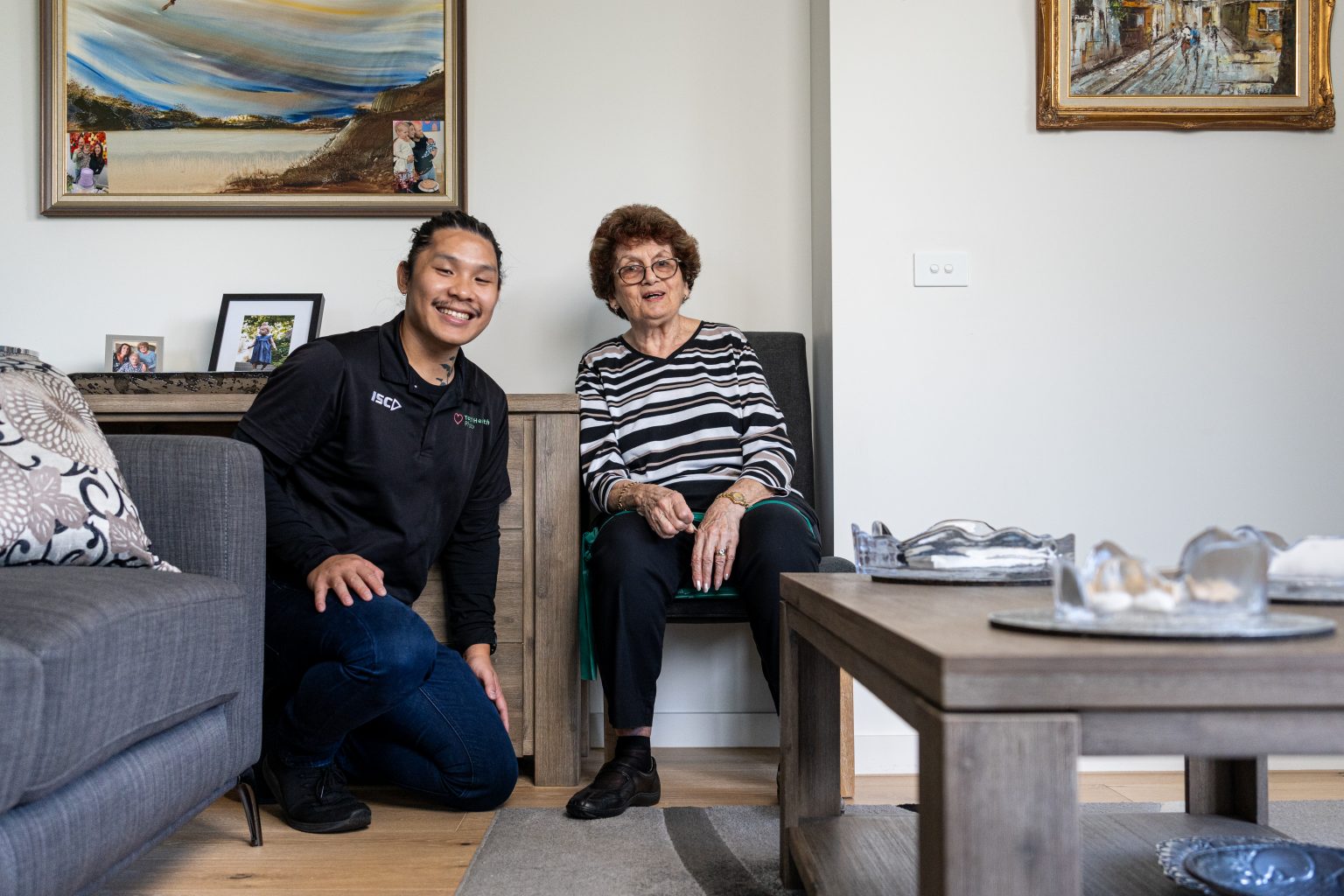
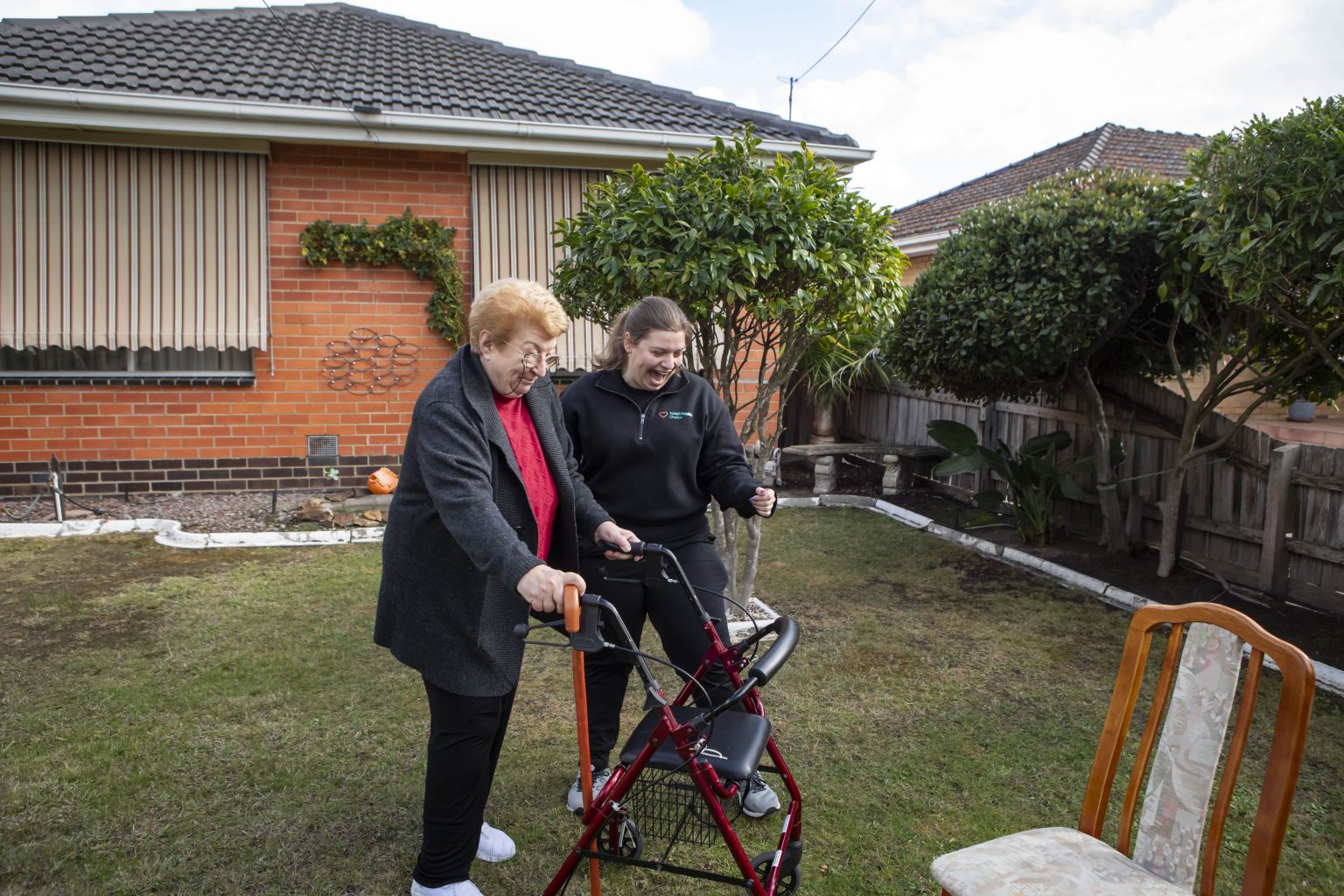
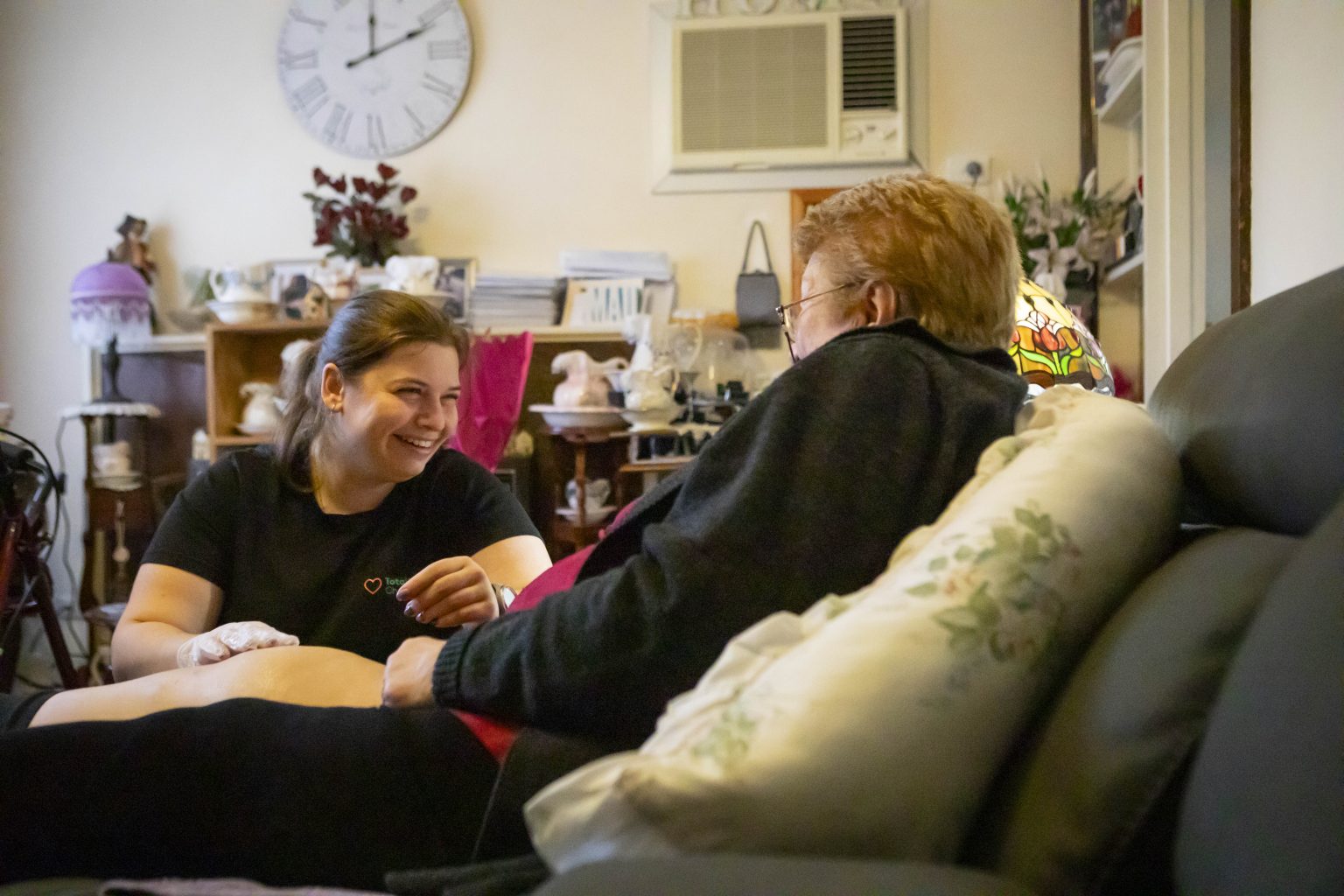
Task specific practice, done in the room where the task happens. Standing up from her own chair. Turning in her own hallway. Getting a cup out of her own cupboard.
Enough repetitions to matter. The single biggest difference between hospital rehab and home rehab is volume, and volume is what falls off the moment nobody is there. We build the program so the repetitions happen without a therapist standing there, and we check whether they did.
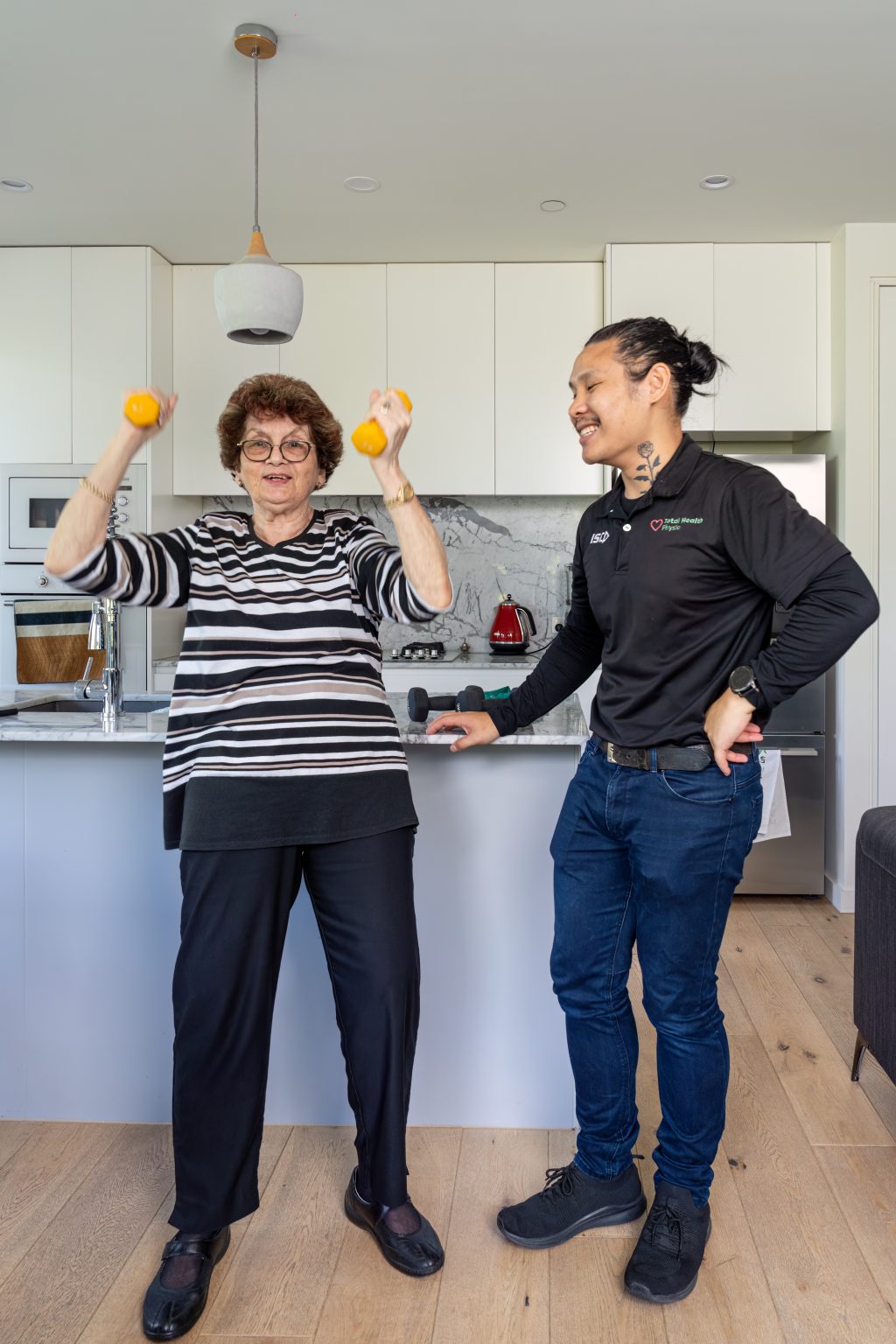
Upper limb work, because the arm gets less attention than the leg almost everywhere and it is the thing that ends up mattering most for dressing, eating and washing.
An occupational therapist for the house, the equipment, and getting back to doing things one handed while the other side improves.
An exercise physiologist for conditioning, which after a stroke is also secondary prevention, and this is the piece almost nobody gets.
A speech pathologist if speech or language were affected. Language recovery keeps going well past the point where most people stop being offered therapy for it.
The same therapists each visit, and they talk to each other.
And a monthly progress report to the family with the outcome measures in it, sent out to the care team involved. Walking into a three month review with three months of repeated measurements changes that appointment completely.