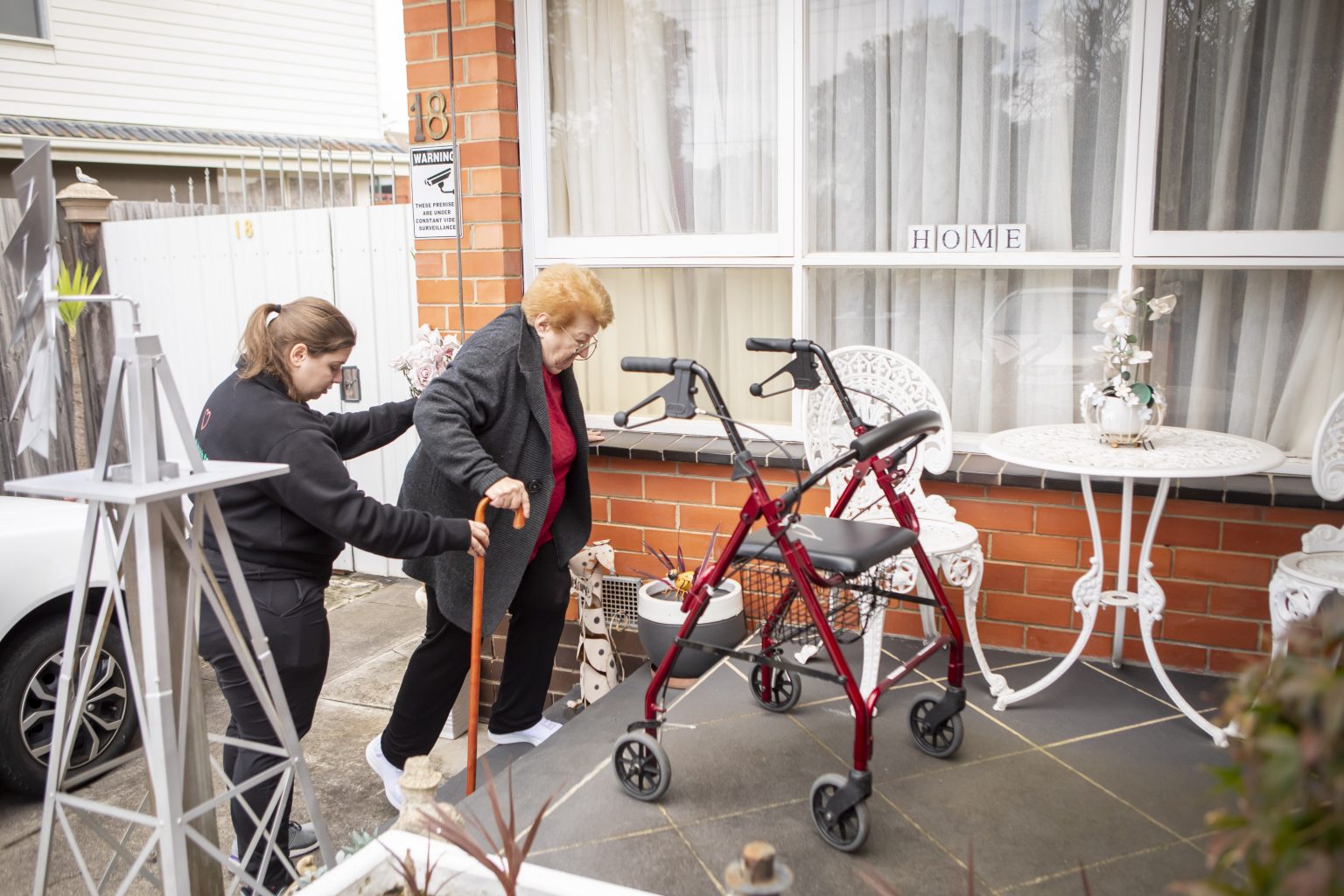
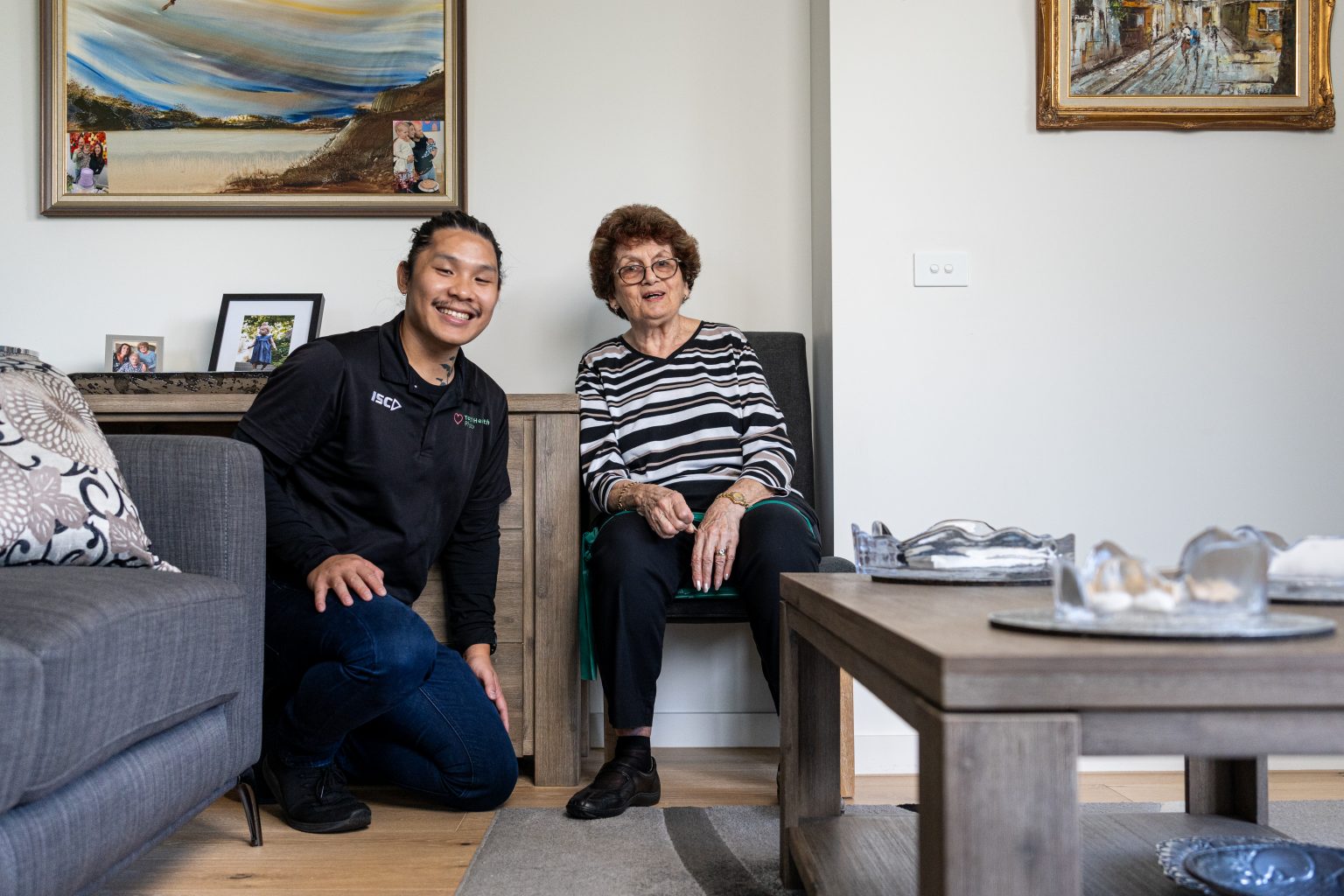
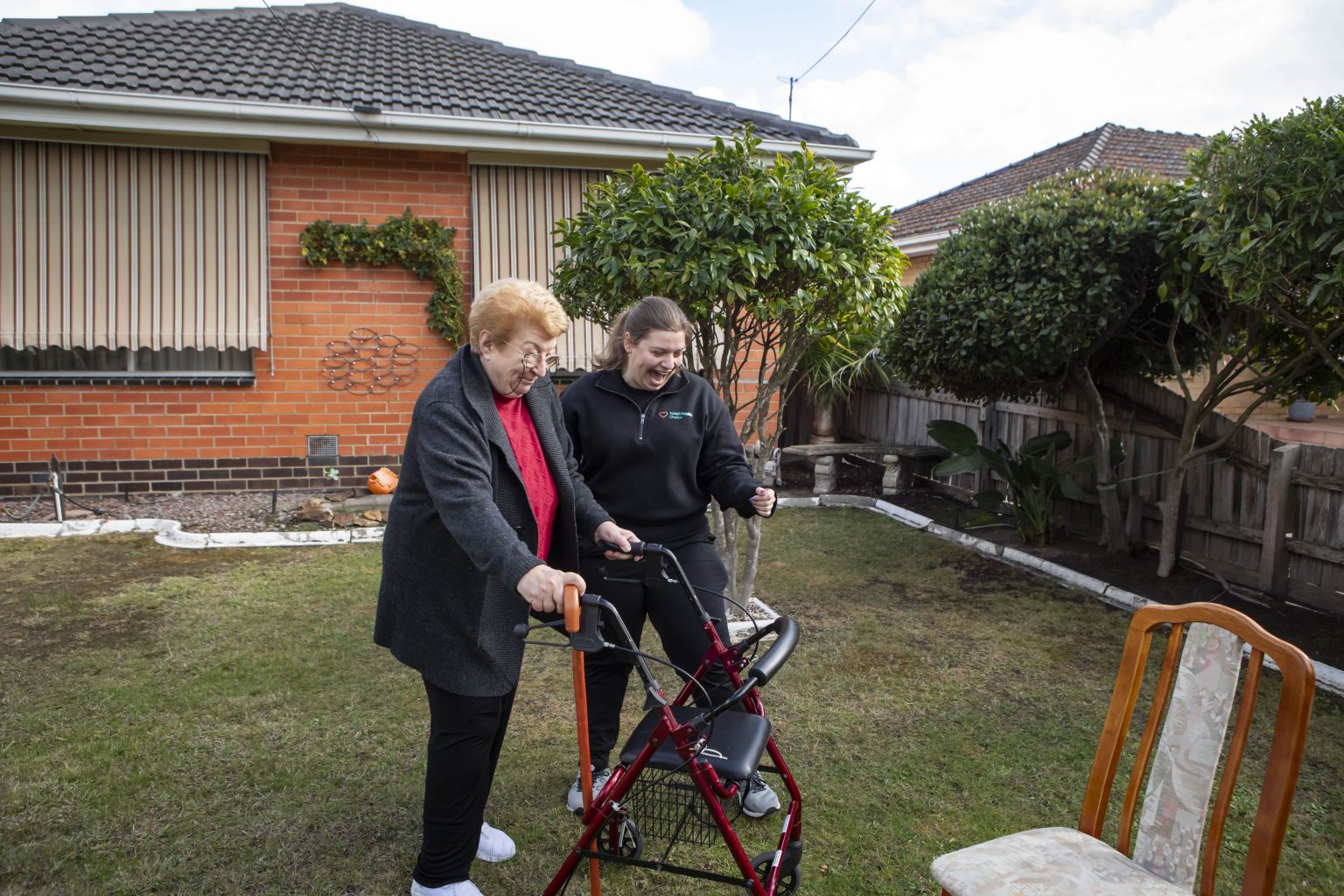
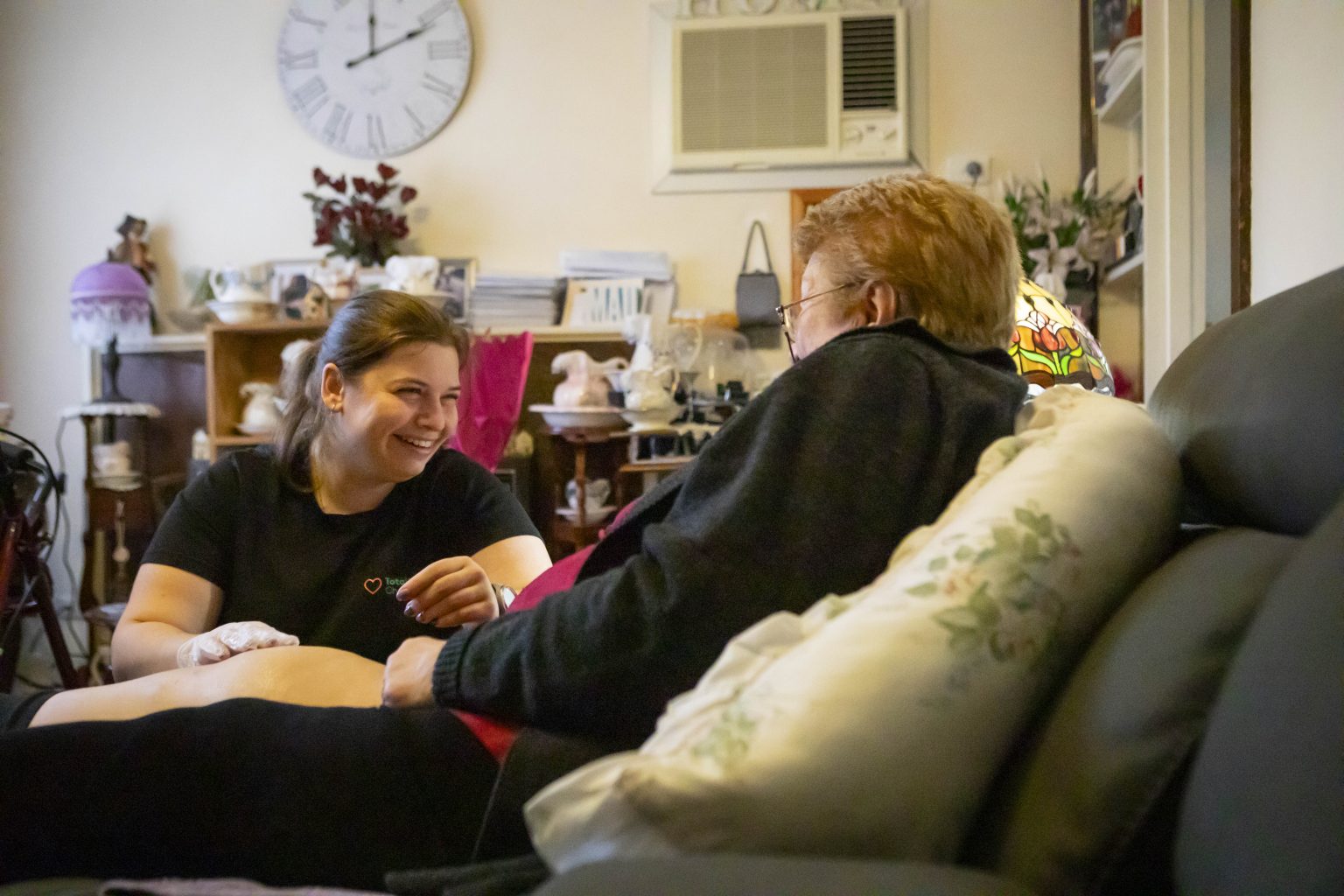
The first twenty minutes is talking. How many falls, stumbles or near misses in the last twelve months, what your mother was doing each time, what time of day, and whether she got herself up off the floor or waited. A near miss counts, because the next one may not be. What she has stopped doing that she used to do. What she is finding hard right now, in her own words.
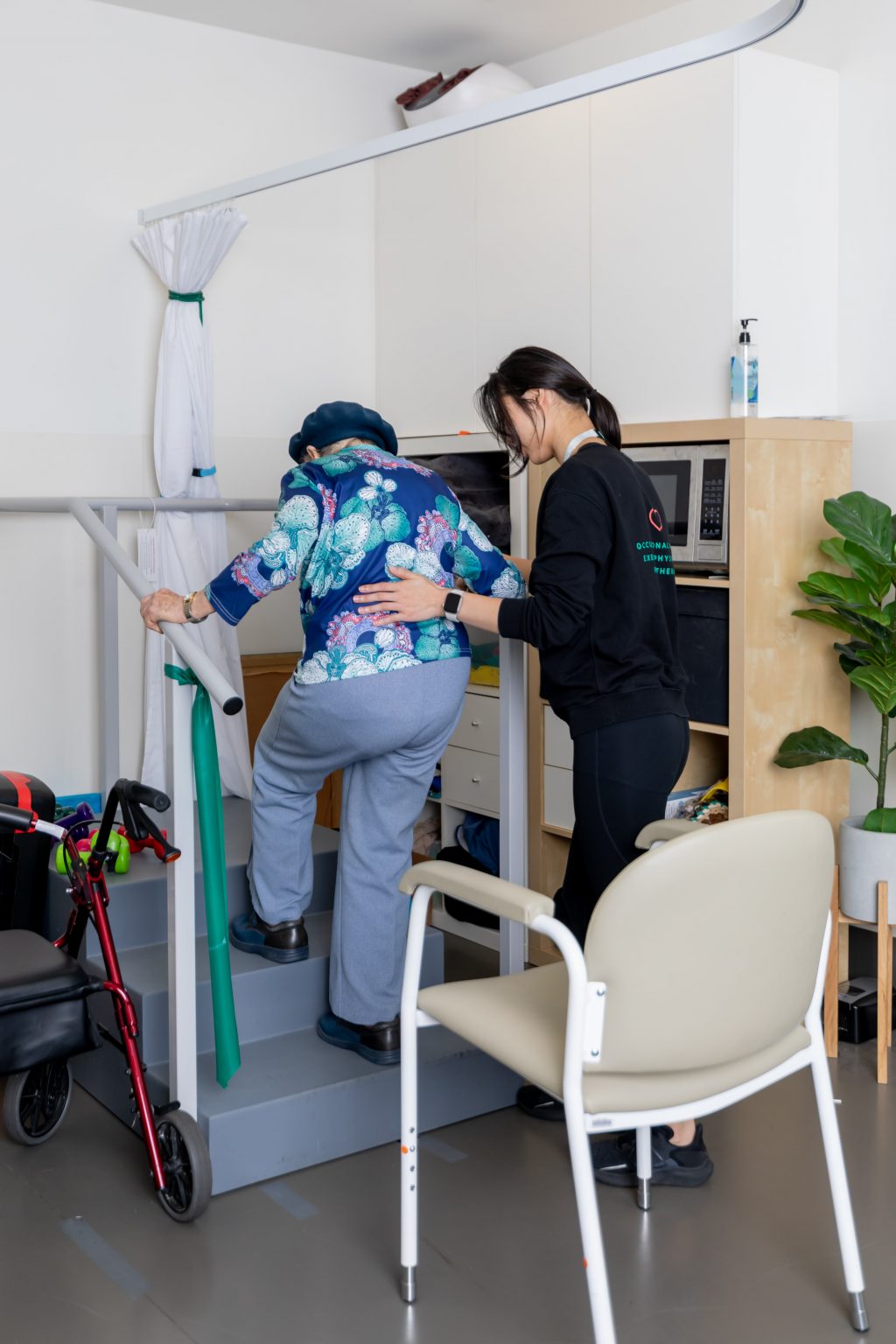
Then we measure things, because a feeling is not a baseline. Timed Up and Go. Thirty second sit to stand. Four stage balance test. Walking speed over four metres. Grip strength. We document what we find, so there is a baseline to measure against.
We look at what she actually wears on her feet around the house, which is usually not the pair she shows visitors.
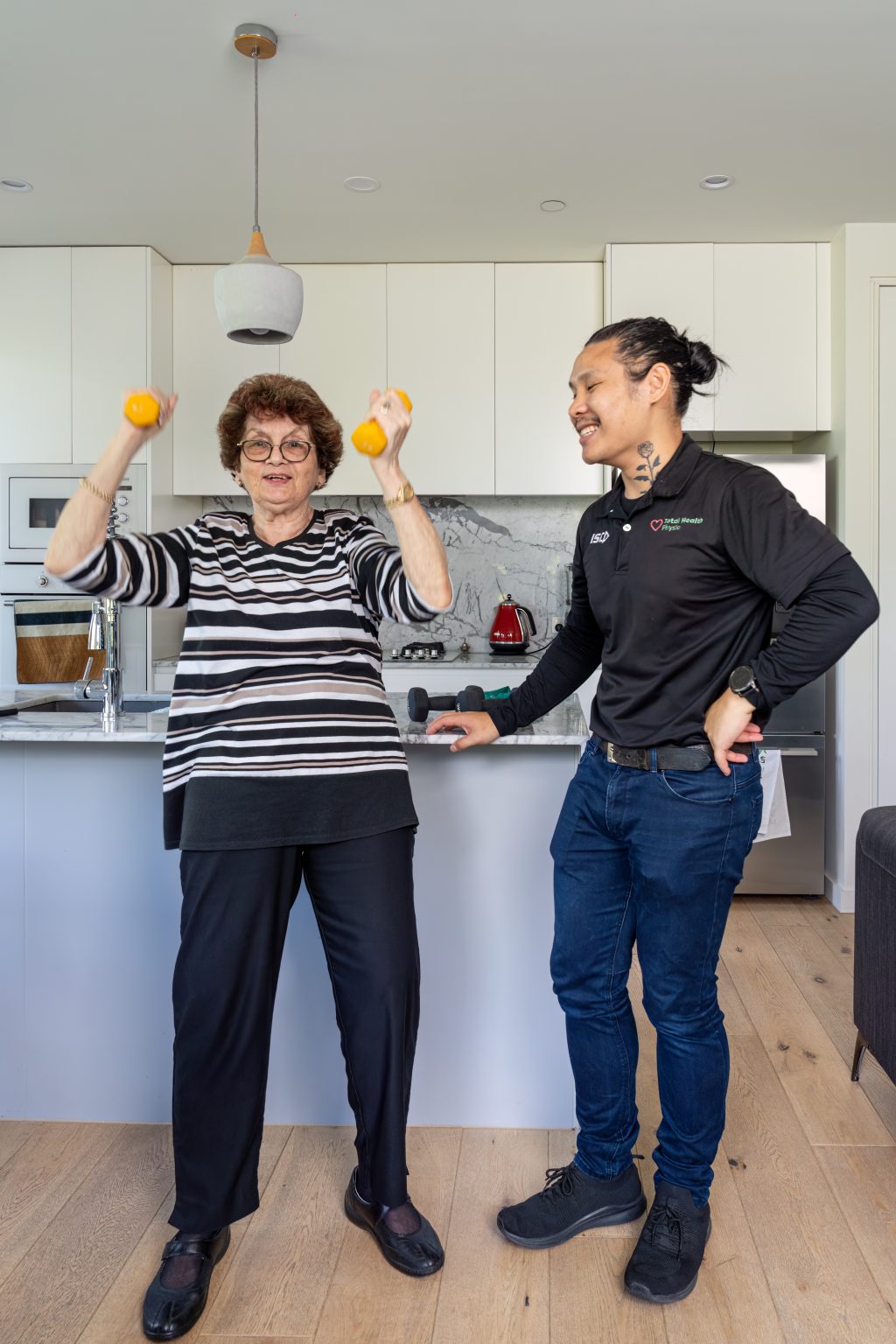
After the visit we send you a written plan and a home exercise program built around what she can tolerate. Seated or standing exercises, near a benchtop or a chair for support, ideally five to ten minutes a few times a week. For someone who cannot follow a list, it might be two movements done with whoever is already there, printed with photographs. A program that does not get done, or does not get done safely, is worse than no program.