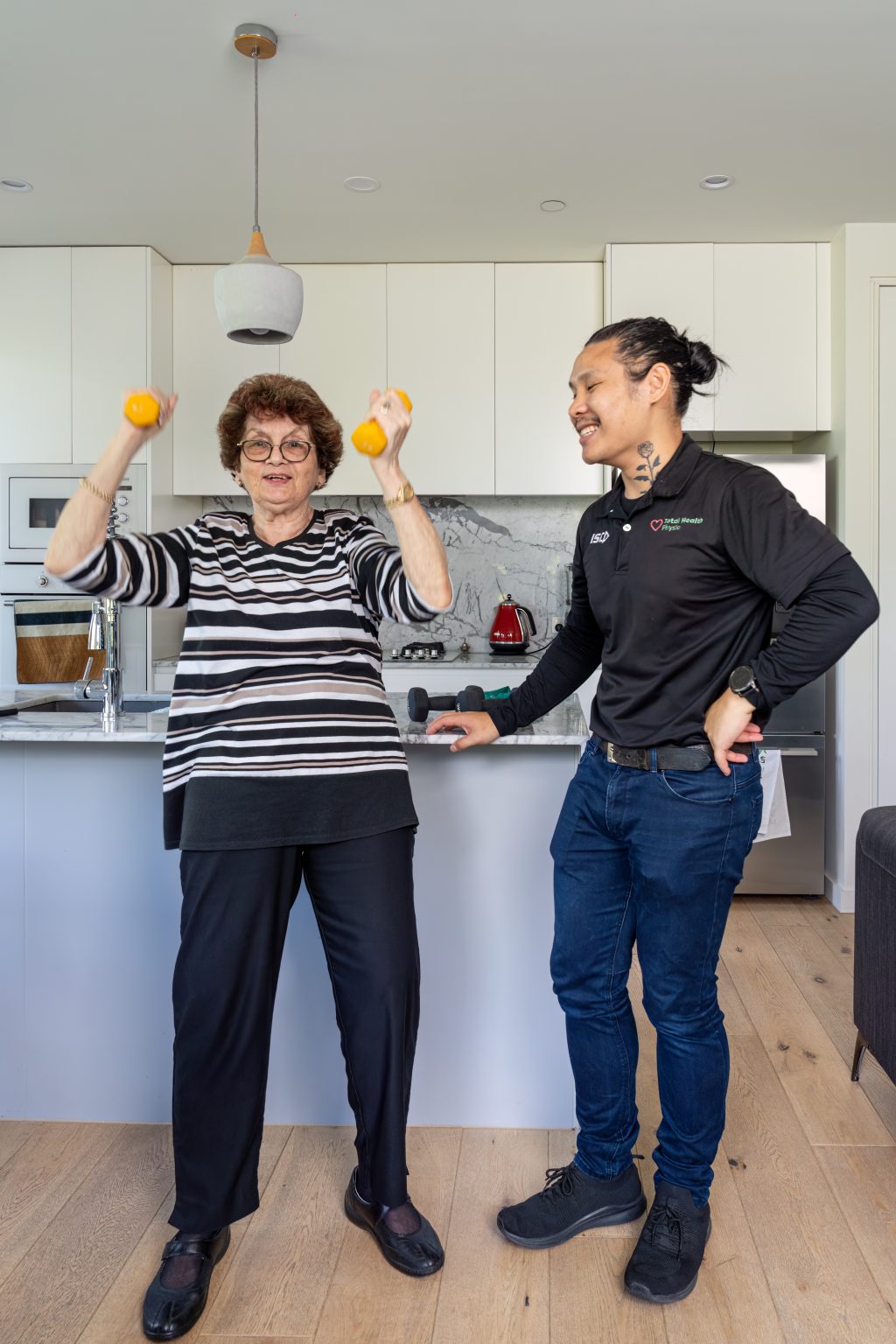
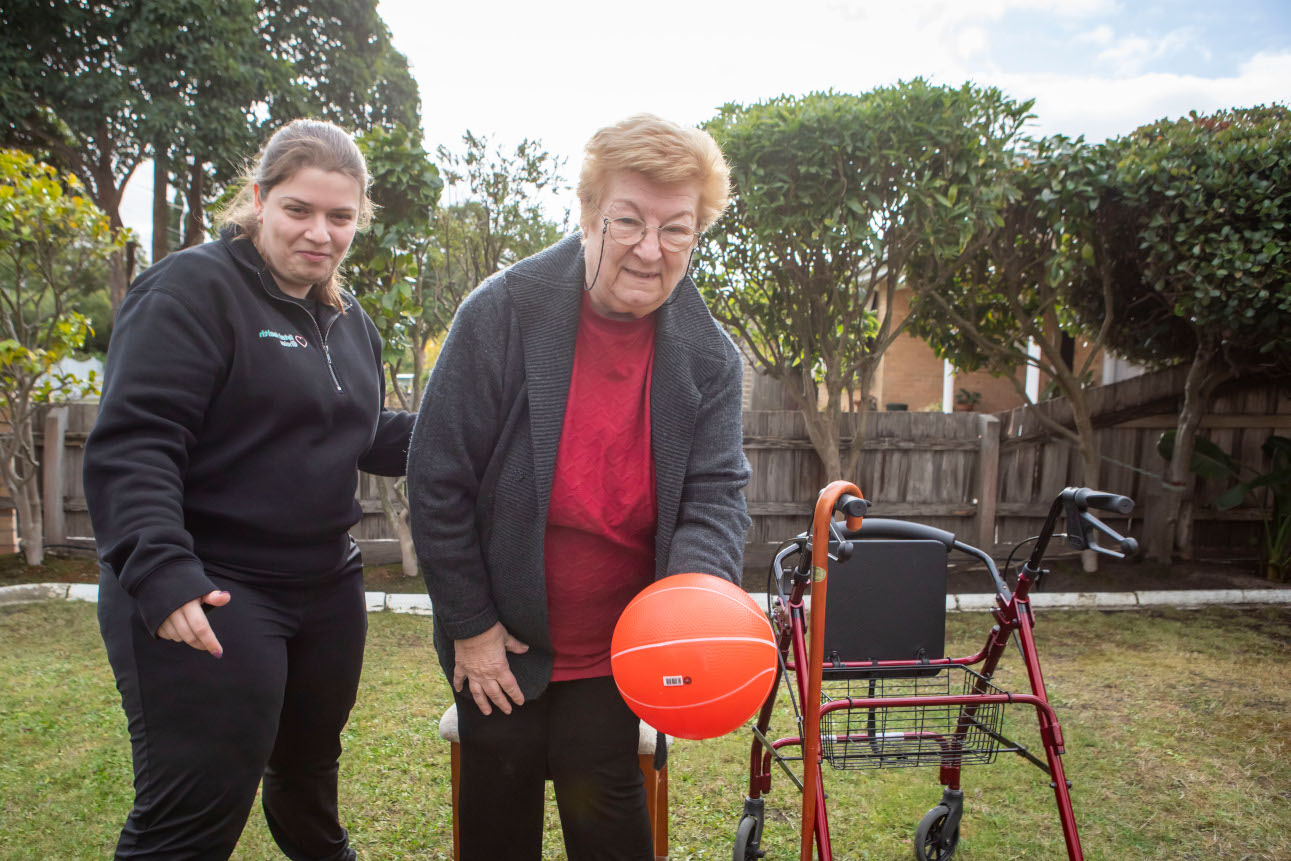
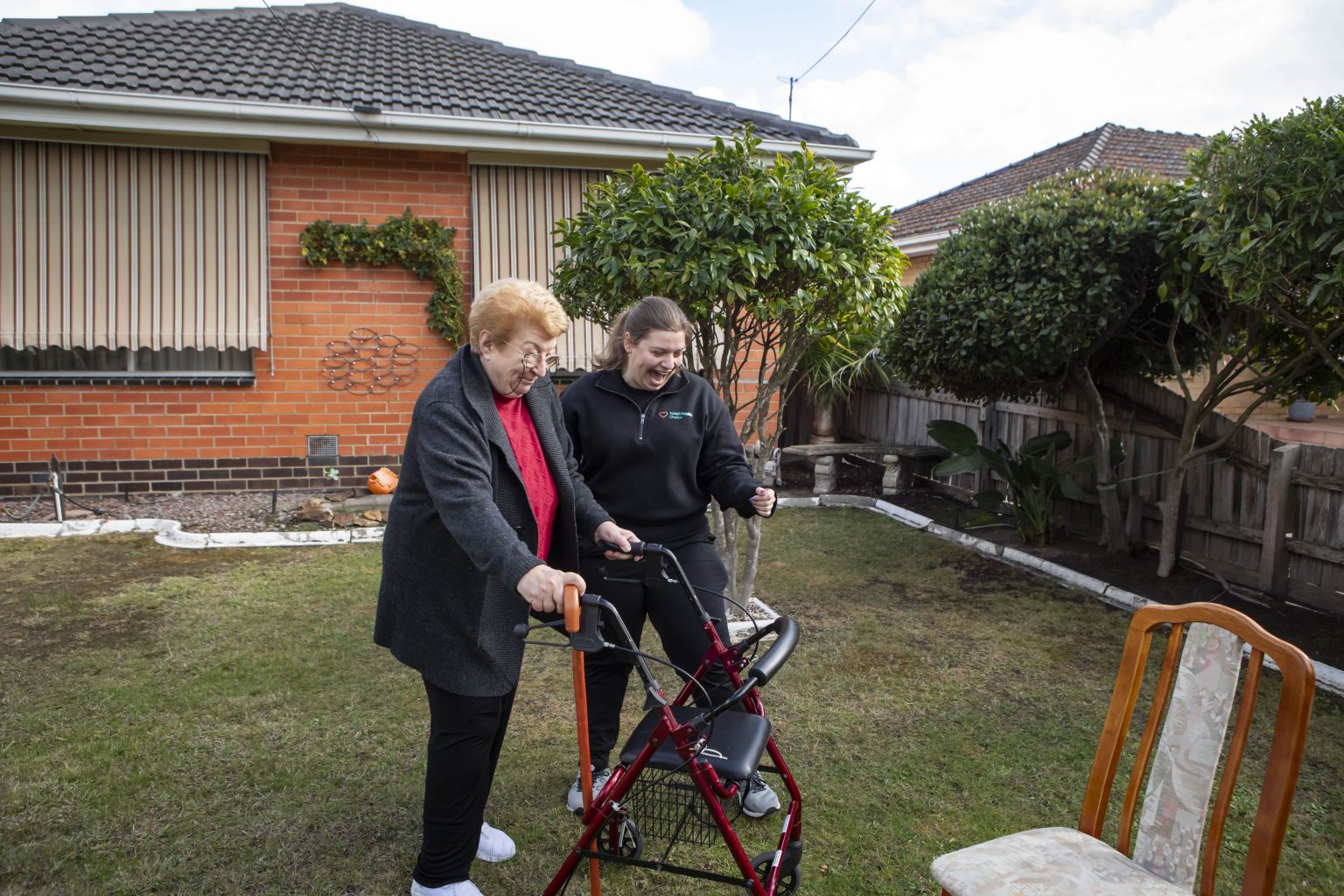
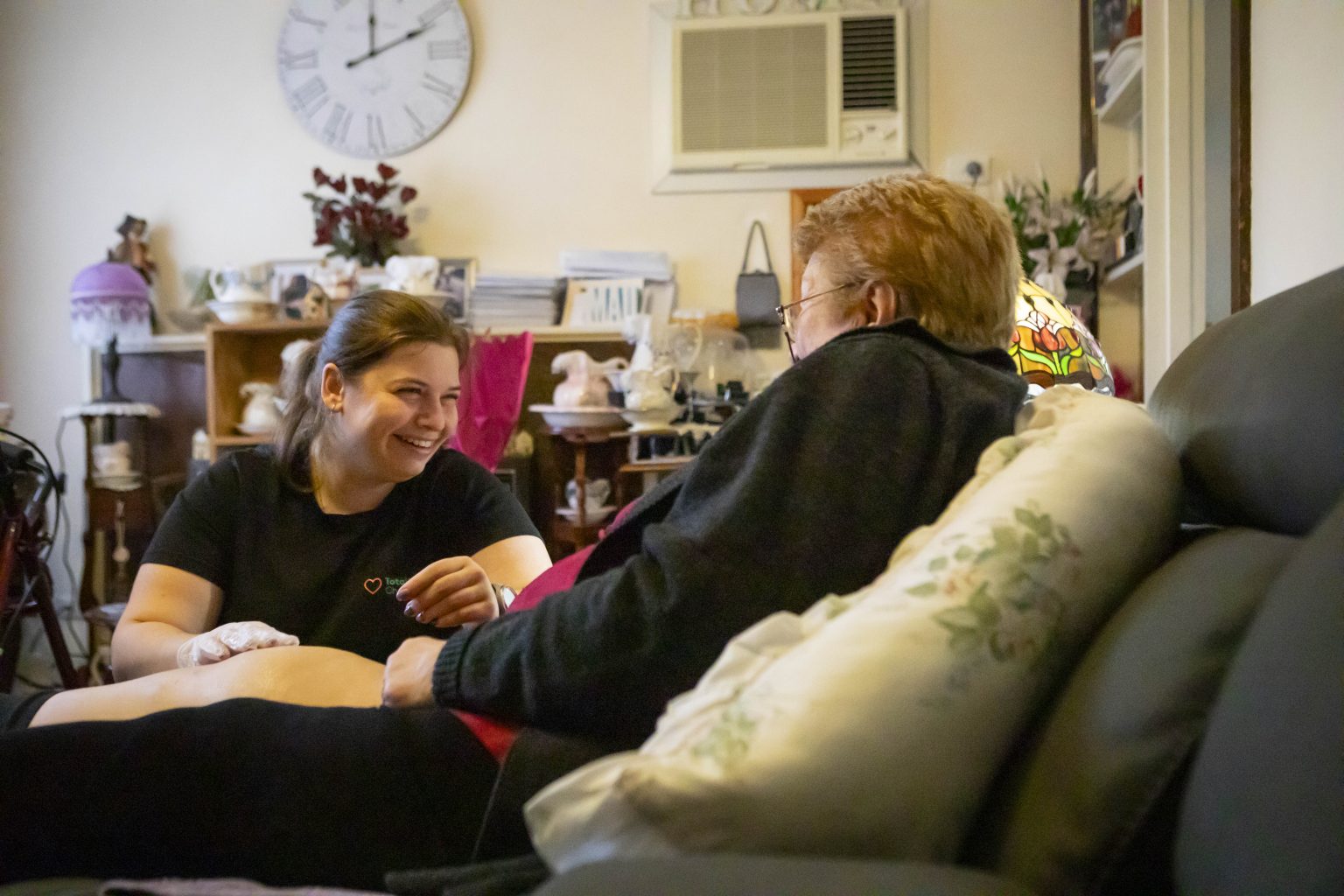
For Parkinson’s specifically, the evidence is for big, loud and hard. Large amplitude movement. Cueing strategies, which is the trick of using a beat or a line on the floor to get through a doorway. Strength work that is heavy enough to matter. Not gentle stretching, which is what most people get offered.
A home exercise program built around what the client can tolerate. Seated or standing exercises, near a benchtop or a chair for support, ideally five to ten minutes a few times a week, printed with photographs.
An exercise physiologist for the harder conditioning work, which is where the strongest evidence sits for slowing functional decline.
A speech pathologist if the voice has gone quiet or the words are getting harder to find. Both are common in Parkinson’s, both are treatable, and both are routinely left until they are much harder to shift.
An occupational therapist for the house, the equipment, and the things that have quietly stopped, like getting dressed without help.
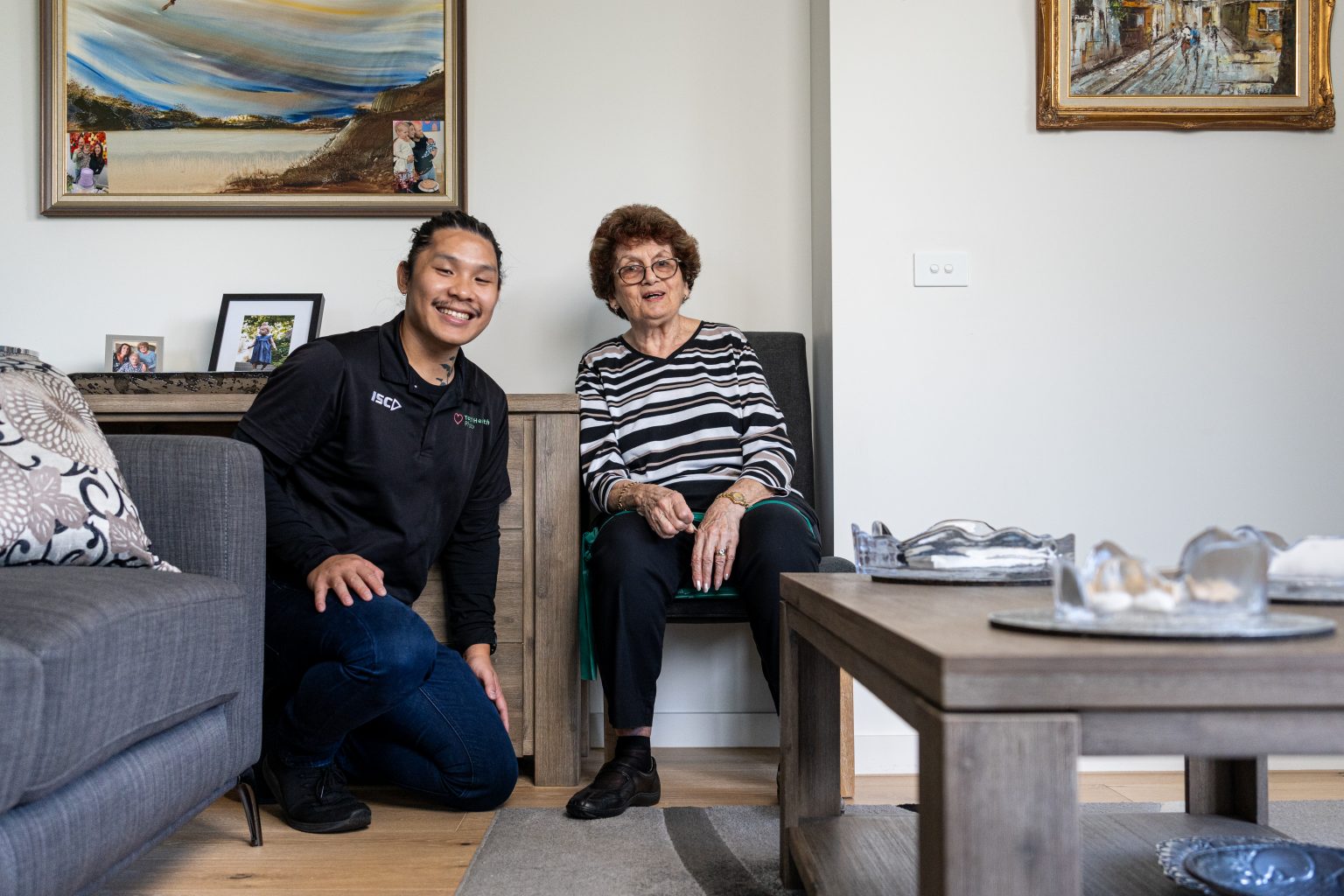
The same therapists each visit, and they talk to each other, because a person with Parkinson’s being seen by four separate businesses is how things get missed.
And a monthly progress report to the family with the outcome measures in it, sent out to the care team involved. With a progressive condition that report is the single most useful thing you can walk into a specialist appointment holding.