

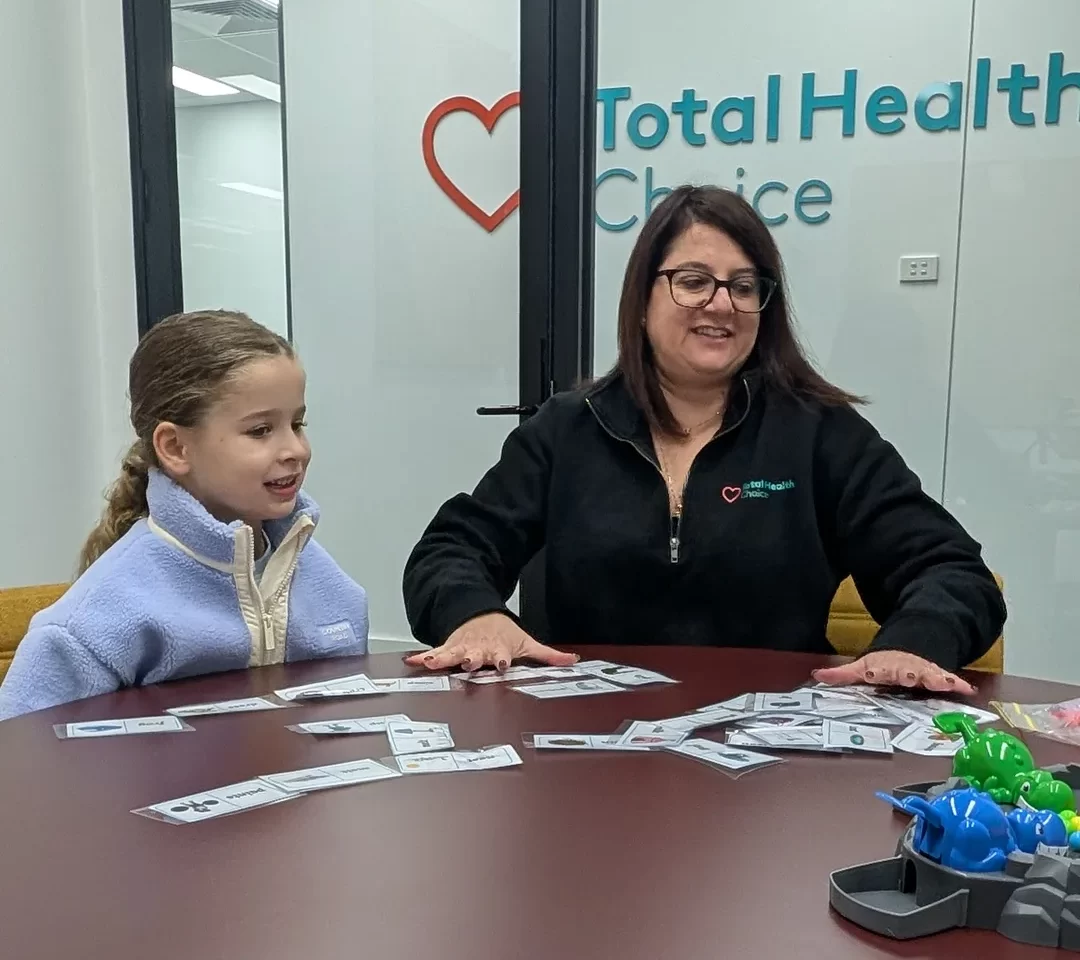

Speech therapy for children across South East Melbourne
Speech therapy for children helps your child understand what people say, use words to get their message across, speak clearly and build the early skills they need for reading and spelling. A speech therapist for kids does most of this through play, books, songs and everyday routines, so it rarely feels like work to your child.
We come to you. Sessions run at home, at kinder or at school, or at THC Kids, our children’s clinic at our Malvern HQ. Every session is one to one, and it’s part of our wider speech pathology at Total Health Choice. We see children from age 2.
The first step is a phone call. Tell us what you’ve noticed, and we’ll talk it through with you.
Signs your child might need speech therapy
Every child learns to talk at their own pace, so it can be hard to know what’s normal. These are the things parents most often tell us made them pick up the phone.
Your toddler isn’t babbling, pointing or using words when other children their age are. Or they have a handful of words but aren’t joining them together yet, like “more milk” or “daddy go”.
People outside the family find your child hard to understand. Sometimes even you have to guess, and your child gets upset or gives up when you don’t get it.
Your child struggles to follow instructions or answer simple questions. They might look at you blankly when you ask them to grab their shoes, or answer a different question to the one you asked.
Your child stutters. They repeat sounds (“b-b-b-ball”), stretch sounds out, or get stuck and can’t get the word out at all.
Your child has started school and finds rhyming, letter sounds or early reading hard, even though they’re bright and trying.
You don’t need a referral or a diagnosis to ask us. If something doesn’t feel right, or a kinder teacher, school or GP has suggested you get it looked at, call us. Children develop at different rates and many catch up on their own. Getting help early still makes a real difference, and it’s much easier to check and hear that your child is on track than to wait and wonder.
What our speech pathologists help with
Paediatric speech pathology covers a lot of ground. Our paediatric speech pathologists work with children in several main areas. Most children need help with more than one, so therapy is built around your child, not a set program.
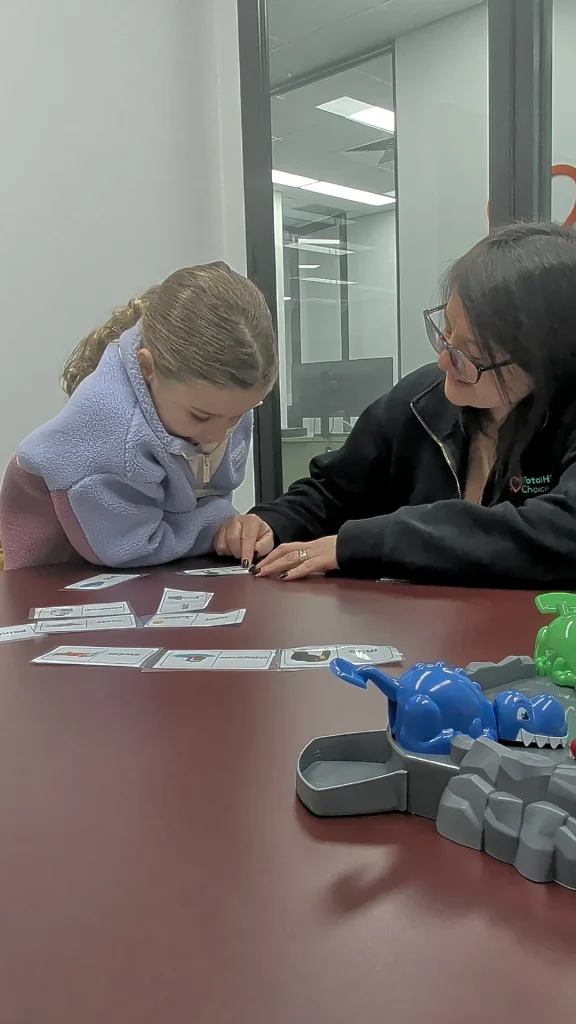
Late talking, language delay and Developmental Language Disorder (DLD)
Language is about understanding words and using them. A child with a language delay might understand less than you’d expect, have fewer words than other children their age, or find it hard to put sentences together. We build words and sentences through play and everyday talk.
Some children’s language difficulties don’t resolve as they get older. When they continue into school and affect learning, friendships or behaviour, it may be Developmental Language Disorder (DLD). DLD affects around two children in every classroom. It isn’t caused by parenting or a lack of intelligence, and the right support makes a real difference at school.
Speech sounds and Childhood Apraxia of Speech
Some children know exactly what they want to say, but the sounds come out differently, so “car” becomes “tar” or “spoon” becomes “poon”. Some sound errors are normal at certain ages. When they hang on longer than expected, or there are a lot of them, it may be a speech sound disorder. We teach your child to hear and make the sounds, one step at a time.
Some children know what they want to say but find it hard to plan and coordinate the movements needed to say it. Their speech may be hard to understand, and the same word can come out differently each time. CAS needs a specific, intensive therapy approach, so we work on sounds, syllables and words with lots of short, focused practice, and show you how to keep it going at home.
Stuttering in children
Stuttering is common in young children, and it isn’t caused by anything you did. We help your child talk more easily, and show you how to respond so talking stays relaxed at home.
Social communication
This is the back and forth of talking with other people: taking turns in a conversation, staying on topic, asking for help and joining in play. We work on it in a way that respects how your child naturally communicates.
Early literacy
Reading, spelling and writing are built on speech and language. Hearing rhymes, breaking words into sounds and matching sounds to letters all come first. Speech pathologists also help children with reading comprehension, which is understanding what they read, and written language, which is putting their ideas into words on the page. If your child is finding these hard at kinder or school, child speech therapy can help before the gap grows.
Communication for neurodivergent children
We work with autistic children, children with ADHD and children with no diagnosis at all. The focus is on helping your child be understood and understand others, in the way that works for them.
Alternative communication (AAC)
Some children need another way to get their message across, either while speech develops or alongside it. That might be signing, picture boards, a communication book, an app or a speech generating device. Using AAC doesn’t stop a child from learning to talk. It gives them a voice now, and we help your family, kinder and school use it every day.
Speech therapy for toddlers
Speech therapy for toddlers looks a lot like play. Your speech pathologist gets down on the floor with your child and uses toys, songs, bubbles and books to get them communicating. You’re on the floor too, because you’re the most important person in this.
While they play, your speech pathologist is listening and watching. How does your child get your attention? Do they point, use gestures or copy sounds? How many words do they understand? How do they let you know what they want?
Speech delay in toddlers is common, and it’s an age where a little help can go a long way. Most of the progress happens between sessions, so you’ll leave each visit with one or two simple things to try during your day. That might be naming things at bath time, or pausing a few seconds so your child has a chance to ask for the next piece of banana.
You don’t need special equipment or extra hours in your week. We use the routines you already have.
Speech therapy for autism
Speech therapy for autism at THC is neuro-affirming. We don’t try to make your child talk or act less autistic. We help your child communicate in the way that works for them, whether that’s words, gestures, sign or pictures, and we help the people around them understand and adjust.
In practice that might mean following your child’s interests in play, helping them ask for what they need or say no, or working with family and teachers so they know how your child communicates and how best to respond. Repeating words and phrases (echolalia), scripting and needing extra time to answer are all treated as communication, not something to fix.
We work with autistic children with and without an NDIS plan, and you don’t need to wait for a formal diagnosis to start.
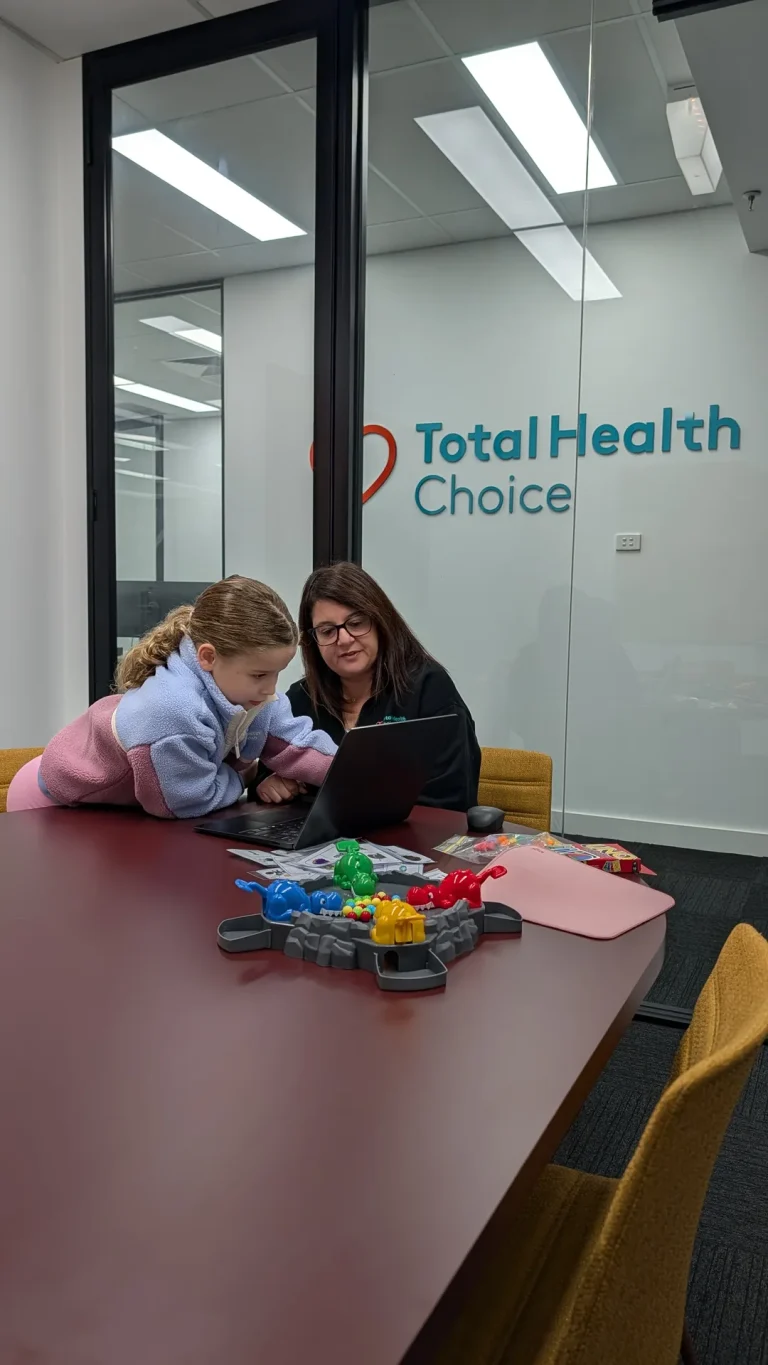
Working with your family, kinder and school
Speech therapy for kids works best when everyone around your child is on the same page. A session is a small part of your child’s week. The rest happens with you, their teachers and their friends.
So we make sure you know what to practise and how. You’ll get simple ideas to use at home, and we’ll check in on how they’re going each session.
We can also see your child at kinder or school, and share strategies with their teachers so they can use them in class.
If your child also sees an OT or physio, we talk to each other. At THC that’s easy, because occupational therapy for children and children’s physiotherapy are part of the same paediatric therapy team.
Meet our paediatric speech pathologist
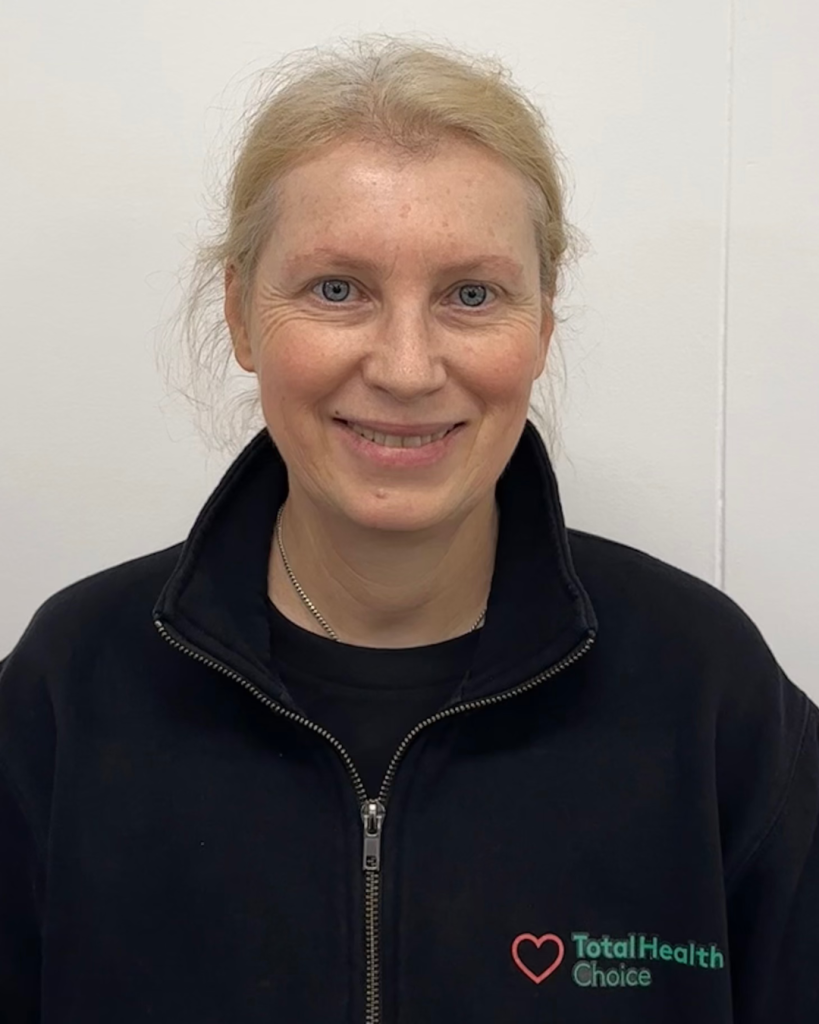
Choosing a speech pathologist for kids is a big decision, so here’s who you’ll meet. Vanessa is our Senior Speech Pathologist. She has more than 20 years’ experience working with pre-school and school-aged children, so whatever you’re worried about, she has very likely seen it before.
Vanessa works in a neuro-affirming way and puts real time into the people around your child. She’ll sit on the floor with your toddler, talk with your child’s teacher, and make sure you leave each session knowing what to do next. Her sessions are calm and playful, and built around what your child loves, whether that’s dinosaurs, trains or kicking a footy.
Vanessa is a Certified Practising Speech Pathologist with Speech Pathology Australia.
Funding: NDIS and private
There are two main ways to fund speech pathology for your child at THC.
NDIS. If your child has an NDIS plan, speech pathology can be funded through it. Supports for young children through the NDIS and other government programs are changing. If you’re not sure what your child can access, call us and we’ll help you work it out.
Private. You don’t need an NDIS plan, a referral or a diagnosis. Call us and we’ll book you in.
If getting to sessions in person is hard, ask us about telehealth.
Looking for help for an older family member? See speech pathology for older adults.
- Helpful information
Questions parents ask
When should I worry about a speech delay?
If you’re worried, that’s reason enough to ask. As a rough guide, talk to a speech pathologist if your baby isn’t babbling or pointing by 12 months, has very few words by 18 months, isn’t joining two words together by two, or is still hard for people outside the family to understand by three. Stuttering that has lasted six months or more, is getting worse or upsets your child is worth checking, and call sooner if there’s a family history of stuttering. If your child loses words or skills they used to have, at any age, see your GP promptly. If in doubt, ask. A phone call costs you nothing.
Can a speech pathologist help a 2 year old?
Yes. Speech therapy for 2 year old children is play based, and you join in. Two is a good age to start, because children this age are picking up new words all the time, and small changes in how the adults around them talk and play can help a lot. Sessions focus on understanding, gestures, first words and joining words together.
Do I need a referral to see a speech pathologist?
No. For private speech pathology you can call us directly, with no referral or diagnosis needed. If you’re using NDIS funding, your child’s plan needs to include funding for therapy supports, and we’ll talk you through what we need from the plan before the first session.
What happens in the first speech therapy session?
The first appointment is with you. Your speech pathologist will talk through what you’ve noticed, your child’s development and what you’d like help with. At the second session they’ll meet your child, play with them and use simple activities and picture books to see how your child understands and uses words and sounds. You’ll leave with first impressions and a plan for what happens next. Some children need more than one session for a full assessment.
How long does speech therapy take to work?
It depends on your child, what they’re working on and how much practice happens between sessions. Some children need a short block of sessions, others need support over a longer time. Your speech pathologist will set clear goals with you, check progress regularly and tell you how things are going. We won’t promise a timeframe, because every child is different.
Can you see my child at kinder or school?
Yes. We see children at kinder and school, as well as at home and at THC Kids at our Malvern HQ. Seeing your child where they learn and play shows us how they communicate with other children and teachers, and makes it easier to share strategies with staff. Once you’ve given consent and let the kinder or school know to expect us, your speech pathologist will arrange session times with them directly.
Is speech therapy covered by the NDIS?
Yes, speech pathology can be funded by the NDIS when it’s included in your child’s plan. Supports for young children are changing, so if you’re unsure what your child can access, call us.
What is the difference between a speech delay and a language delay?
Speech is about how words sound: making sounds clearly so people can understand. Language is about understanding words and putting them together to share ideas. A child with a speech delay may know exactly what they want to say but be hard to understand, while a child with a language delay may speak clearly but use fewer words or find sentences hard. Some children have both.
When language difficulties continue into the school years, it may be Developmental Language Disorder (DLD).
- Start the conversation
Not sure if your child needs speech therapy? Give us a call. We’ll ask what you’ve noticed, answer your questions and, if it makes sense, book a first session at home, kinder, school or THC Kids in Malvern. Or make an enquiry and we’ll call you back.
