

Maybe you’ve noticed it on your last few visits. Mum holds onto the bench as she makes her way through the kitchen. Dad takes the stairs one at a time now, or has quietly stopped using them. Nobody has fallen, so it feels like there’s nothing to do yet. You tell yourself you’re probably overreacting, and you drive home.
If that sounds familiar, this one is for you.
Why we usually meet families one fall too late
Most of the falls referrals that come through our team arrive after a fall. Often it isn’t the first one. When our physiotherapist or occupational therapist gets to the home, the fall usually wasn’t the first sign. It was just the first one that made it onto a form.
Then you hear the rest of the story. The bench Mum has been holding for months. The walk to the letterbox that stopped. The shower that has felt “a bit tricky” for a while. All of it was there well before anyone made a phone call.
That’s not a failing on anyone’s part. A fall is easy to see. It brings an ambulance, a GP visit, a referral. A parent who is walking a little more slowly each month brings nothing, and so it slides past, especially for the people who love them most and see them every week.
Why “it’s not bad enough yet” keeps families waiting
If you’re the son or daughter in this situation, you’ve probably already had some version of this conversation. “I’m fine.” “I’ve always walked like this.” “Don’t fuss.” Your parent has run their own life for decades, and the last thing they want is to be treated as fragile.
And you may not want to be the one who says it. Nobody enjoys telling their dad he’s slowing down. There’s also a quiet belief a lot of families carry that help is something you get after something has gone wrong, and that asking for it sooner means making a fuss over nothing.
In our experience, it works the other way around. The families who call early tend to have more options, because there is more strength, balance and confidence to build on. Asking for an assessment is a way of helping your parent keep doing what they love for as long as possible.

Early signs your parent might be at risk of falling
These are some of the changes we hear about most from families:
- Holding onto furniture, walls or benches to get around the house
- Walking more slowly, taking shorter steps or shuffling
- Needing a few goes, or a big push with their arms, to get out of a chair
- Avoiding the stairs, the shower or going out
- Trips and near misses (“I just caught myself”)
- Saying they feel unsteady, or that they’re worried about falling
- Feeling dizzy or light-headed when they stand up
One sign on its own doesn’t mean a fall is coming. If you’re noticing a few, or they seem to be getting worse, it’s worth a conversation.
Why starting early makes such a difference
After a fall, many older people become frightened of falling again. We cover that cycle in The Paradox of Protecting Older People by Making Them Less Active.
Starting before a fall means working with the strength and confidence your parent still has. It is much easier to keep someone moving than to get them moving again once an injury, a hospital stay or a loss of nerve has set in.
What a physio and an occupational therapist do at home
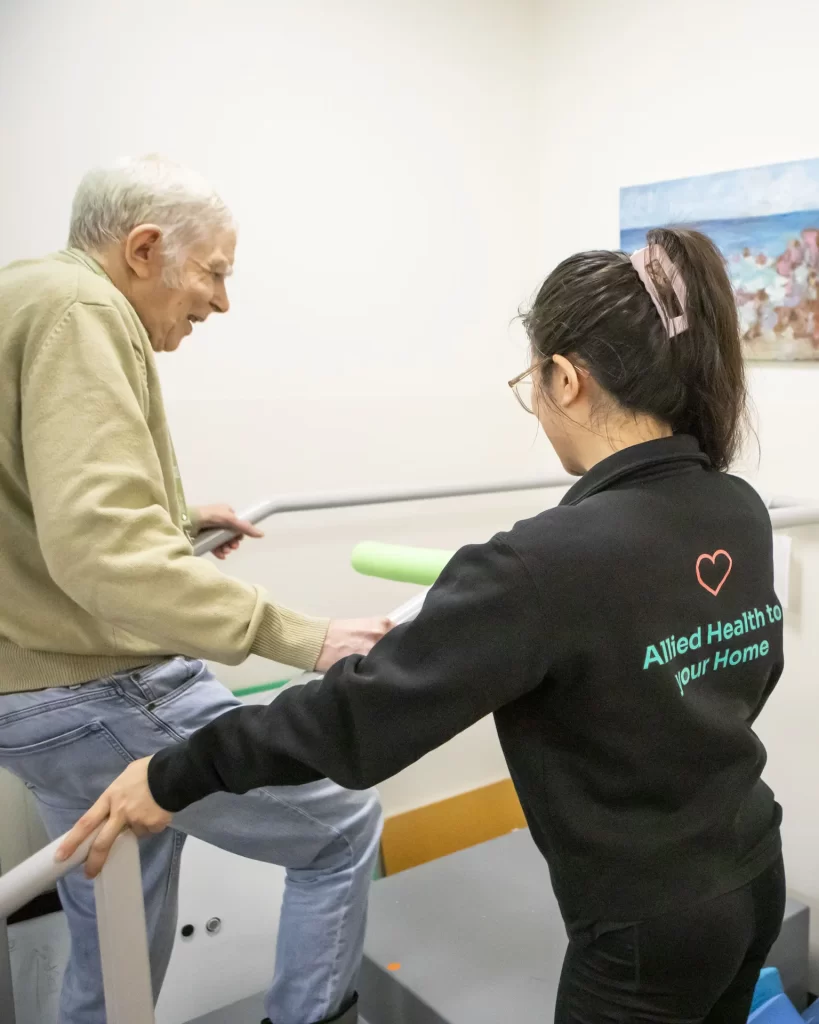
A physiotherapist comes to your parent’s home and looks at how they move in their own space. From there, they put together an exercise program for your parent to do at home, set at the right level for them. The physio keeps checking in and adjusting it. What happens at a falls assessment at home.
Please don’t start your parent on a new exercise program without checking with a physio or their GP first. What’s safe and useful is different for every person.
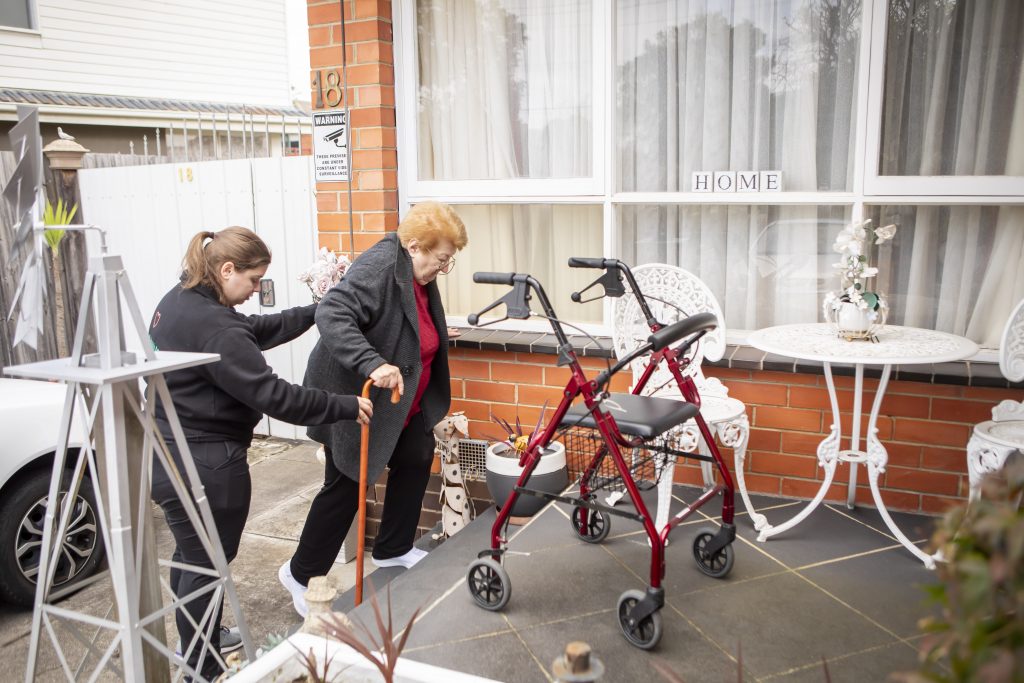
An occupational therapist (OT) looks at the home itself and at the everyday tasks that are getting harder. Then they suggest practical changes. That might be grab rails, a shower chair, better lighting in the hallway at night, moving a rug that keeps catching, or putting everyday items where they’re easy to reach. Small changes can make a big difference to how confident someone feels in their own home.
How to raise it with Mum or Dad
This is often the hardest part, and there’s no perfect script. A few things tend to help.
Begin with what they care about. “I’d love you to be able to keep doing the garden” lands very differently from “I’m worried you’re going to fall.” Most people will say yes to something that keeps them in their own home and doing their own things.
Call it a check-up rather than a verdict. A physio or OT visit is closer to a service for the car than a diagnosis. You’re looking for small adjustments while there’s plenty of room to make them.
Offer to be there for the first visit. Many parents relax once they’ve met the person and seen that nobody is taking over. And let them stay in charge of the decisions. If the plan is theirs, they’re far more likely to follow it.
How to get a physio or OT involved
If your parent has a Support at Home package, talk to their care manager about including physio or OT in their plan. You don’t need to wait for a fall to ask.
If they don’t have a package, or they’re still waiting for an assessment, you can book a physio or OT privately. You don’t need a referral to see a physio in Australia. Home visit physio, Aged care OT.
When to get help straight away
- Call 000 if your parent has fallen and hit their head, can’t get up, or is in pain or seems unwell.
- See their GP soon if they’ve had a fall, even with no injury, or if there’s a sudden change in their walking, balance, dizziness or confusion. Sudden changes can have a medical cause that needs checking.
- Book a physio or OT assessment if you’re noticing the slower changes in the list above.
If you’ve noticed a change, that’s enough. You don’t need a fall, a diagnosis or a hospital letter to ask for help. We would much rather meet your mum or dad one fall early than one fall late. If you’d like to talk it through, our team is happy to help.
This article is general information, not personal medical advice. If you or someone you care for has had a fall, speak to your GP or physiotherapist.
