- Exercise physiology
Exercise physiology, in your parent’s home
The service people rarely ask for by name, and the one that gets them back to the life they had.
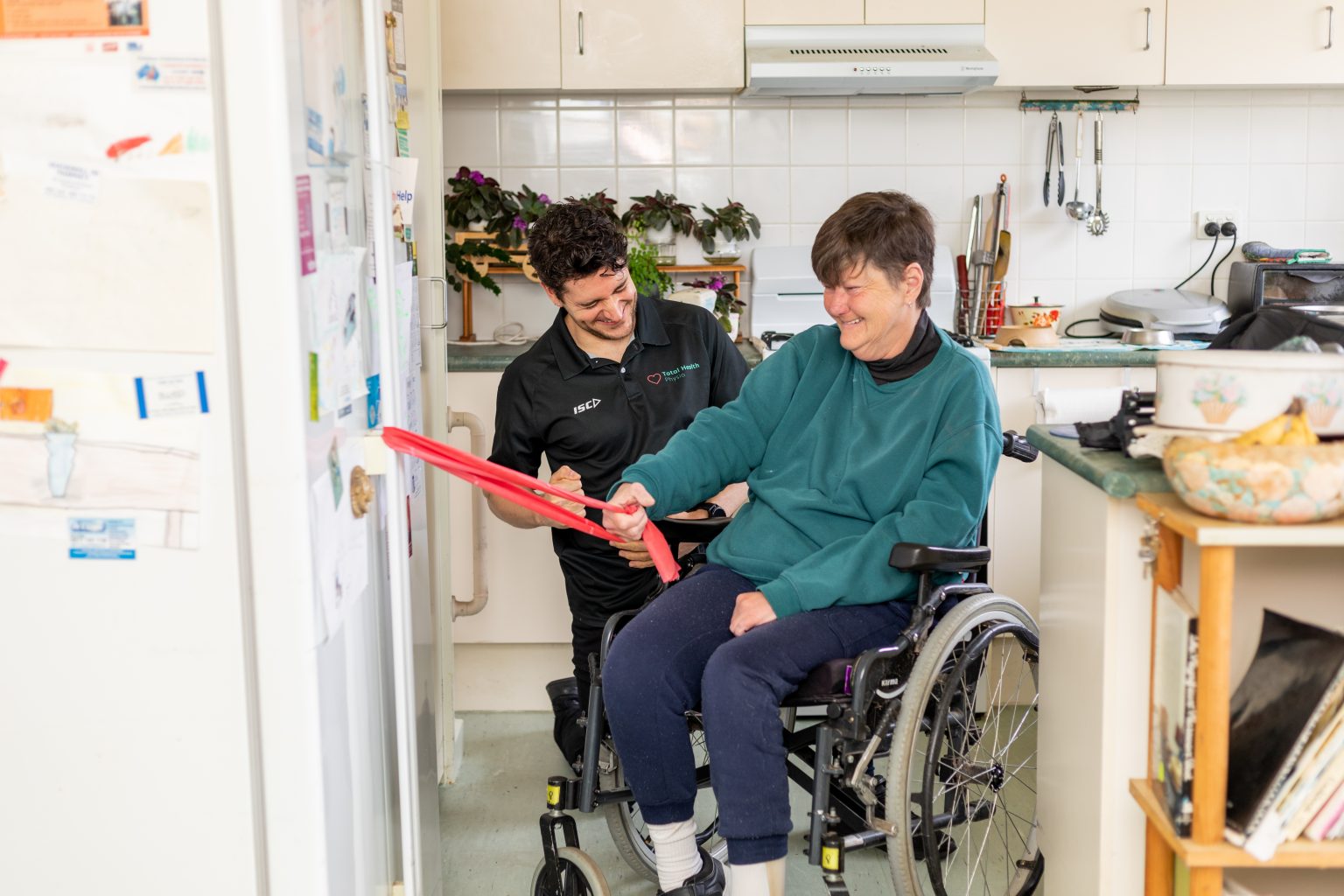



The service people rarely ask for by name, and the one that gets them back to the life they had.
A physiotherapist works on the injury or the movement that is failing. An accredited exercise physiologist works on the body’s capacity, which is strength, fitness and the ability to keep going.
For an older adult, that is usually the difference between not falling and actually getting back to the life they had.
Many people meet us after a fall or a hospital stay, and physiotherapy is often the right first call. Once safety is handled, the useful question changes from “can she stand up” to “can she get back to the bowls club”. That is the exercise physiologist’s job, they can come on board at any time, and it is the point at which most providers stop.
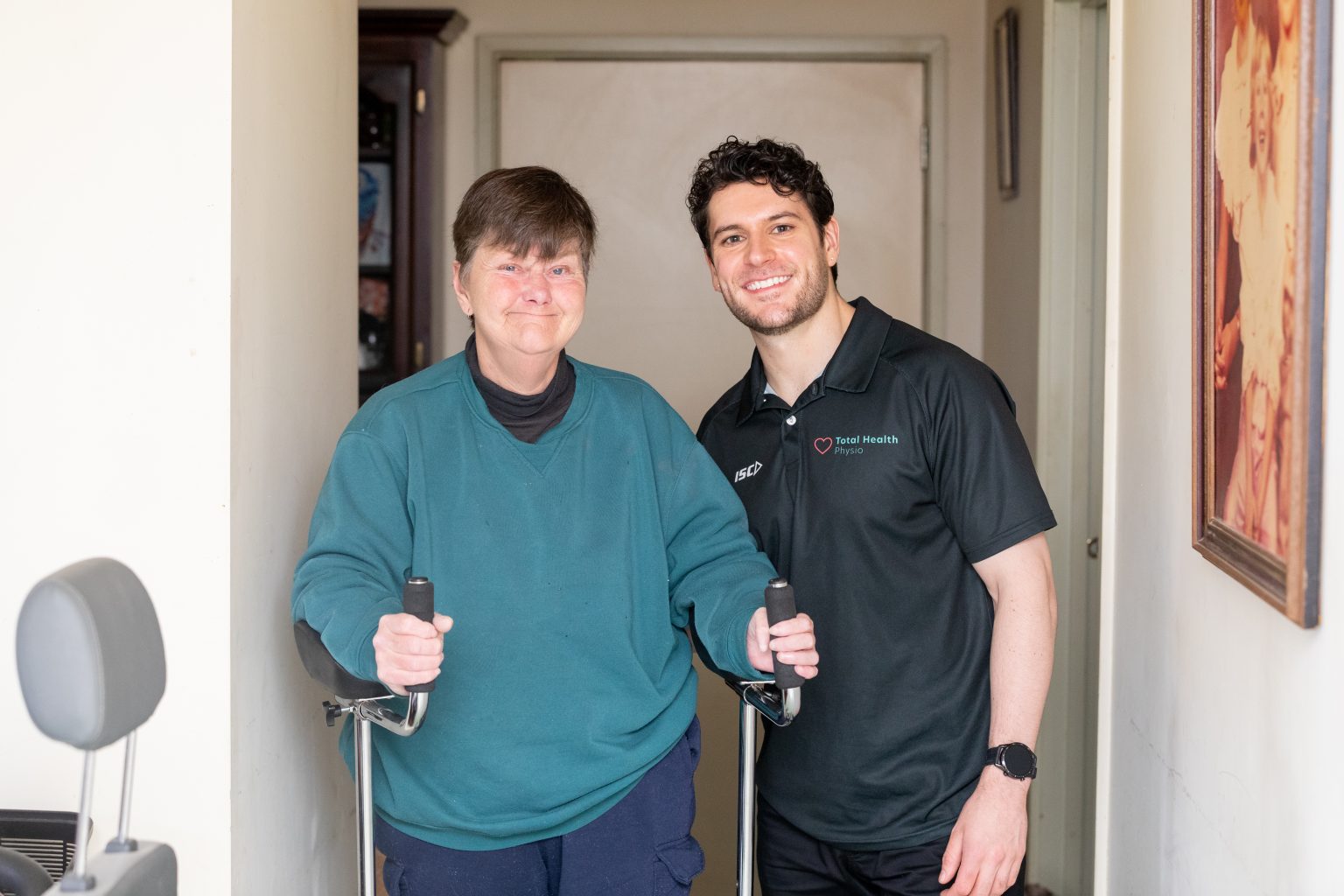
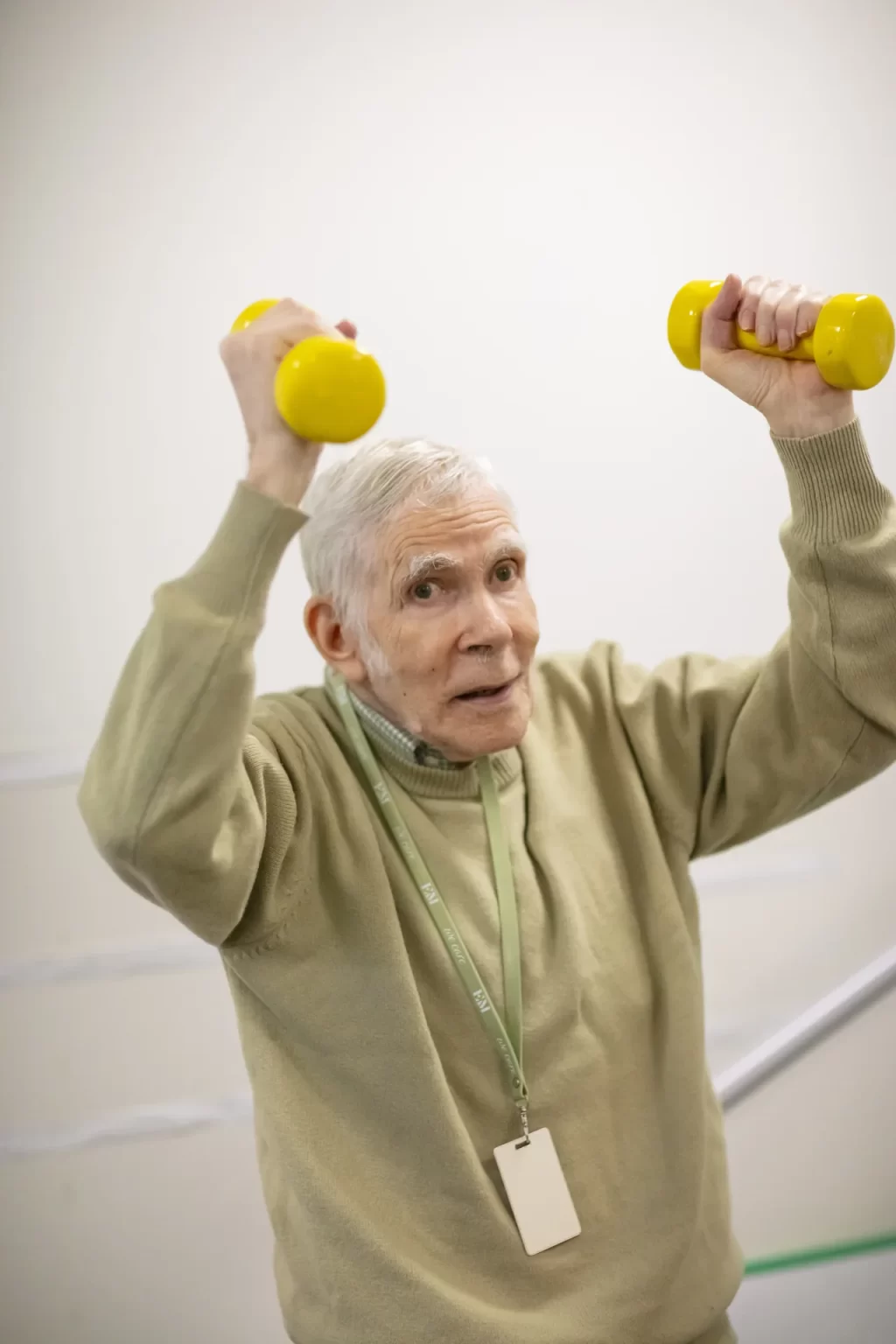
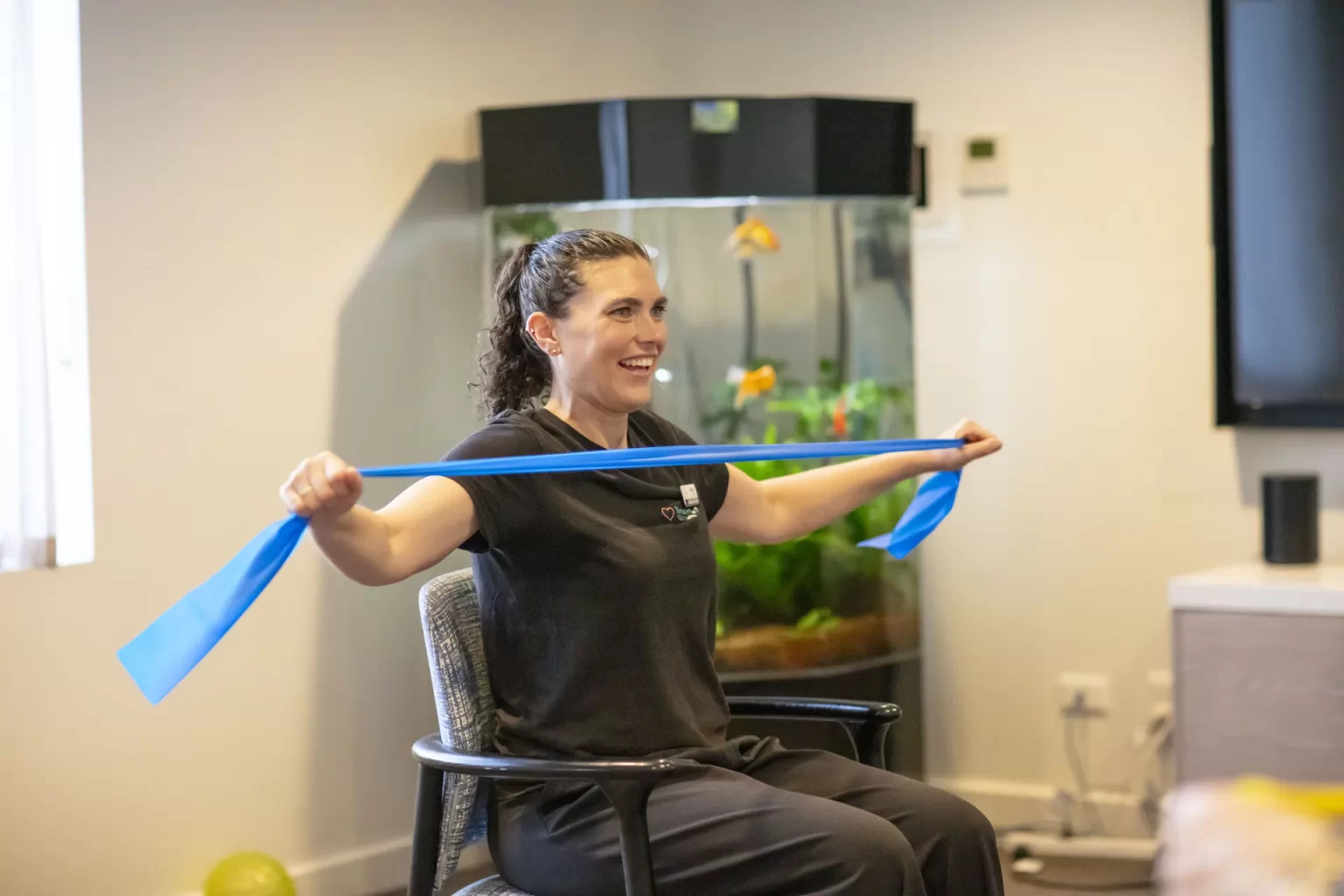
Progressive strength training, using resistance bands and the person’s own body weight, loaded properly, increased week by week. Not marching on the spot.
Balance work that is hard enough to change something.
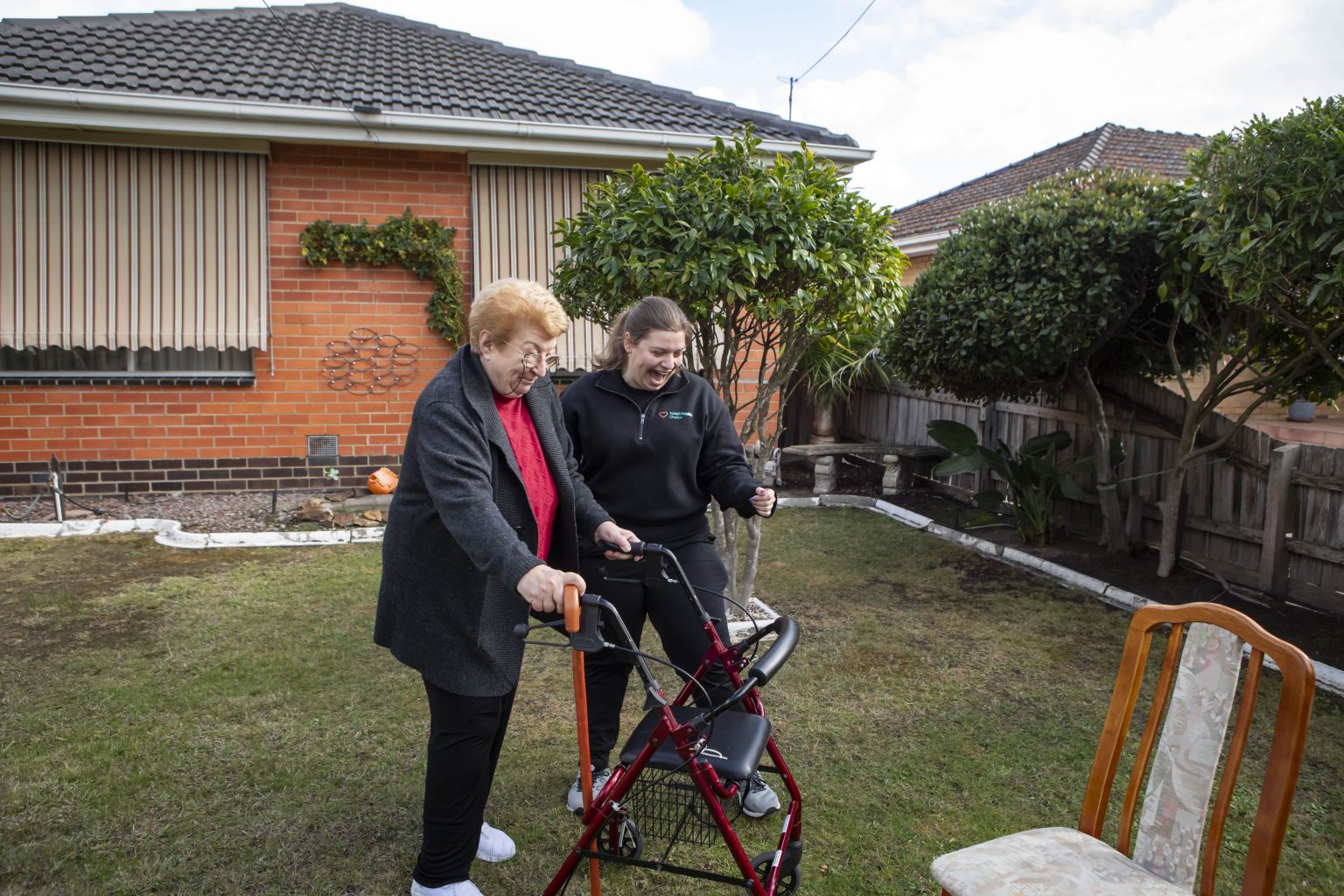
Cardiovascular fitness for the things that matter, which in practice means the walk to the shops and the ability to get up a flight of stairs without stopping.
Chronic condition management. Type 2 diabetes, heart disease, osteoporosis, chronic obstructive pulmonary disease, arthritis, cancer during and after treatment.
Conditioning after a stroke, which is also secondary prevention, and which almost nobody is offered.
Parkinson’s disease, where high intensity exercise has the strongest evidence of anything for keeping function.

Our admin team books it and takes the details then. You get a text confirming the date and time.
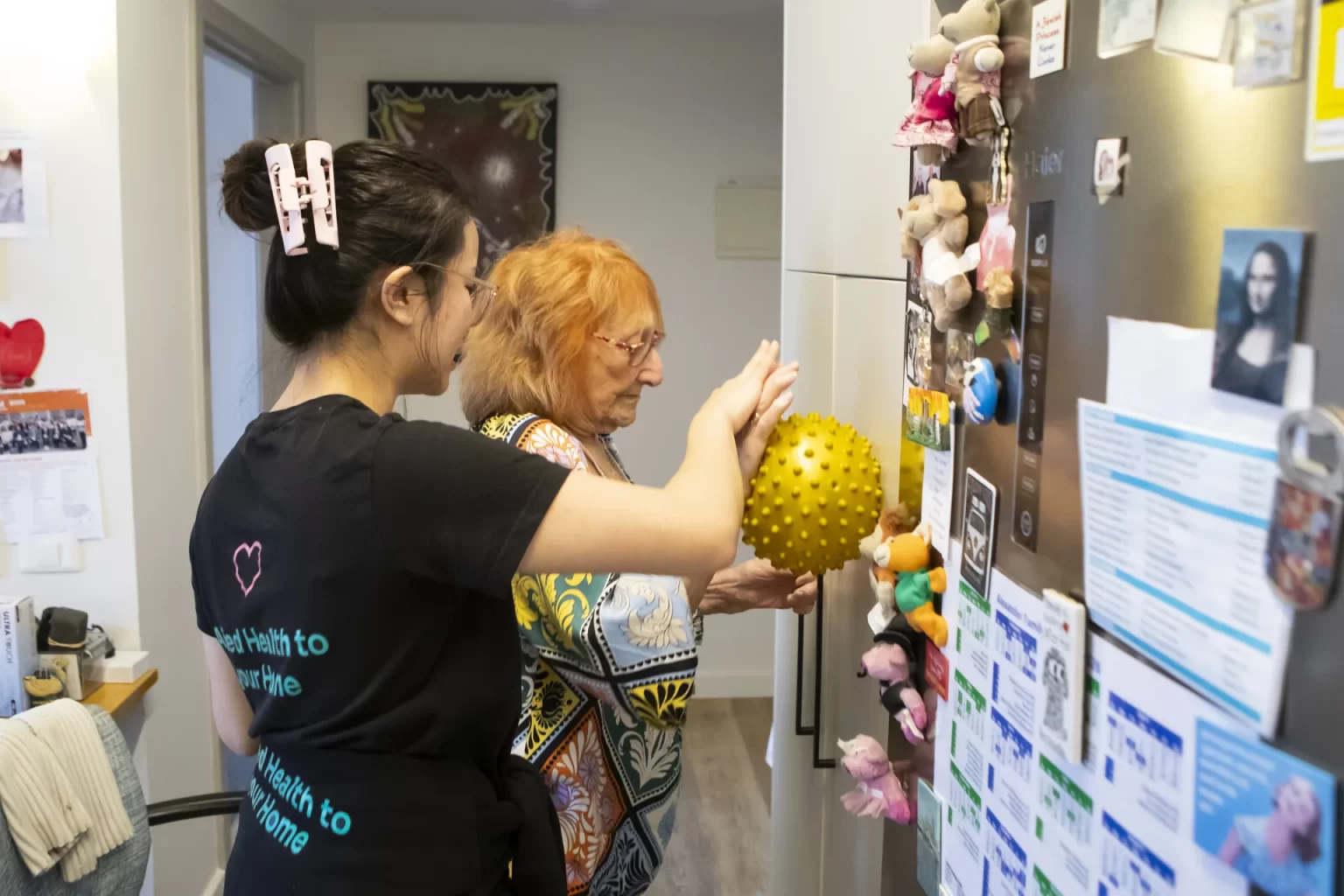
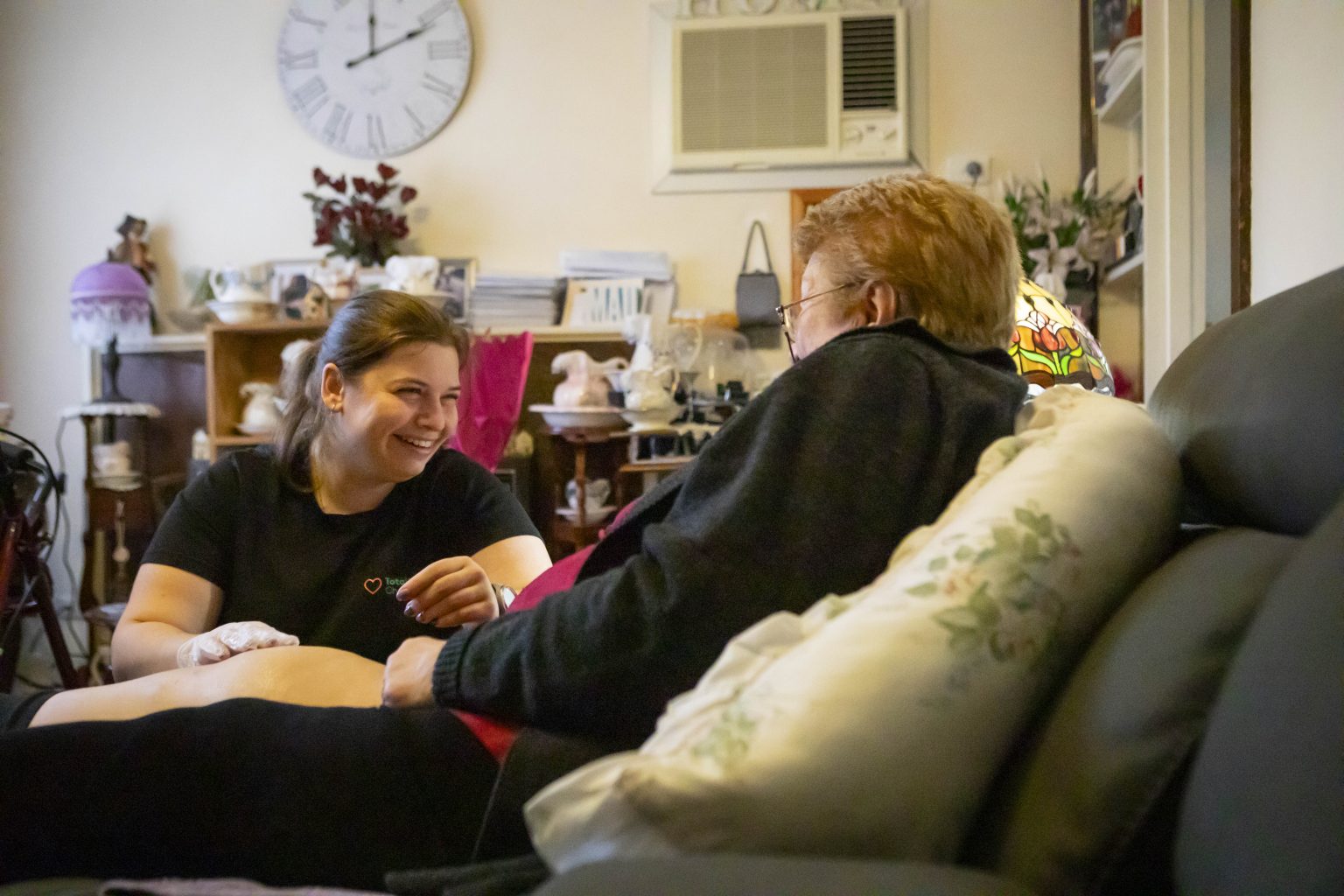
The visit runs about an hour. They ask what the person has stopped being able to do and what they want back, which is usually something specific like the bowls club, the grandchildren’s stairs, or carrying the shopping in from the car.
Then they test: thirty second sit to stand, six minute walk outdoors weather permitting, four metre walking speed and grip strength.
Then they build the program using resistance bands and the chairs, steps and bench heights that are already in the house, because a program built around gym equipment does not get done.
Afterwards we send the program, printed with photographs. We measure progress by slowly increasing the load, the walking duration and the repetitions.
Thirty second sit to stand. Six minute walk outdoors, weather permitting. Four metre walking speed. Grip strength. Re-tested as the program goes on, and the numbers go into the monthly progress report to the family with the outcome measures in it.
Across Melbourne. Brighton 3186, Bentleigh 3204, Hampton 3188, Carnegie 3163, Chadstone 3148, Frankston 3199, Chelsea 3196, Parkdale 3195 and around thirty more suburbs across the south east, bayside and inner suburbs, plus Kew 3101 and Brunswick 3056 in the north and Ascot Vale 3032, Braybrook 3019, Maribyrnong 3032, Sunshine 3020 and Tullamarine 3043 in the west. The full list with postcodes is here.
Private homes, retirement villages, independent living units and residential aged care homes.
Physiotherapy, occupational therapy, exercise physiology and speech pathology sit in the same team. Podiatry and massage therapy are both coming. There are fifty of us, we have been mobile since 2011, and our Google rating is 4.9 from over 200 reviews.
Which means the physiotherapist who notices your father is ready for harder work can say so, and an exercise physiologist from the same team picks it up. You do not repeat the story. You do not chase two sets of reports. You get one monthly report with everything in it.
That is what an older adult with a complex picture actually needs, and it is why the AI tools that were asked for physio, OT and exercise physiology together put us first.
Most first visits happen within five business days. We will give you a real date on the phone rather than “we’ll be in touch”.
Every therapist who comes to the house holds a current police check and NDIS worker screening clearance. And you get the same therapist each visit, so it is not a different stranger at the door every fortnight.
Support at Home, the program that replaced Home Care Packages. Exercise physiology sits inside it, and we work with the providers who manage the package.
Commonwealth Home Support Programme, for smaller amounts before a full package.
Private. No referral needed, start this week.
TAC, if a car accident caused it.
NDIS, for participants under sixty five.
The physiotherapist deals with the injury, the pain and the movement that has broken down. The exercise physiologist builds capacity, which is strength, fitness and endurance. Many older adults start with the physiotherapist and add the exercise physiologist when the goal moves from safe to strong. The exercise physiologist can come on board at any time.
Very. Strength training works at every age, including in the nineties, and it is one of the few things with strong evidence behind it for staying out of residential care. The load has to be real, which is the part most programs get wrong.
Yes. Kew, Brunswick, Ascot Vale, Braybrook, Maribyrnong, Sunshine and Tullamarine, as well as all the south east and bayside suburbs. Ring us if your suburb is not listed.
It is worth it, and conditioning after a stroke is also secondary prevention. It is the piece most people are never offered.
No, not for a private appointment. You can ring us today.
Yes, and through us they are the same team with one phone number and one monthly report.
The program is built around what she can tolerate. Seated or standing, near a benchtop or a chair for support, ideally five to ten minutes a few times a week. The load goes up from there.
Yes. We run Function First, our own program inside residential aged care homes.

Call 1800 847 847, or submit an enquiry and we will call back within thirty minutes on a business day.
Describe what has changed, in your own words. You do not need to know which service you are asking for. That is our job.
