• Assistive Technology

Mobility Scooter Prescription

Occupational Therapy assessment and mobility scooter prescription to support safe transport, social participation and greater independence in the community.

Our mobile Occupational Therapists assess your mobility, goals, home environment and safety needs, then recommend practical scooter options suited to your circumstances.

  • NDIS Registered
  • Mobile OT Support
  • Equipment Trials
  • Occupational Therapy prescription

Mobility Scooters

Total Health Choice Occupational Therapists are experienced in prescribing mobility scooters for people across Melbourne.

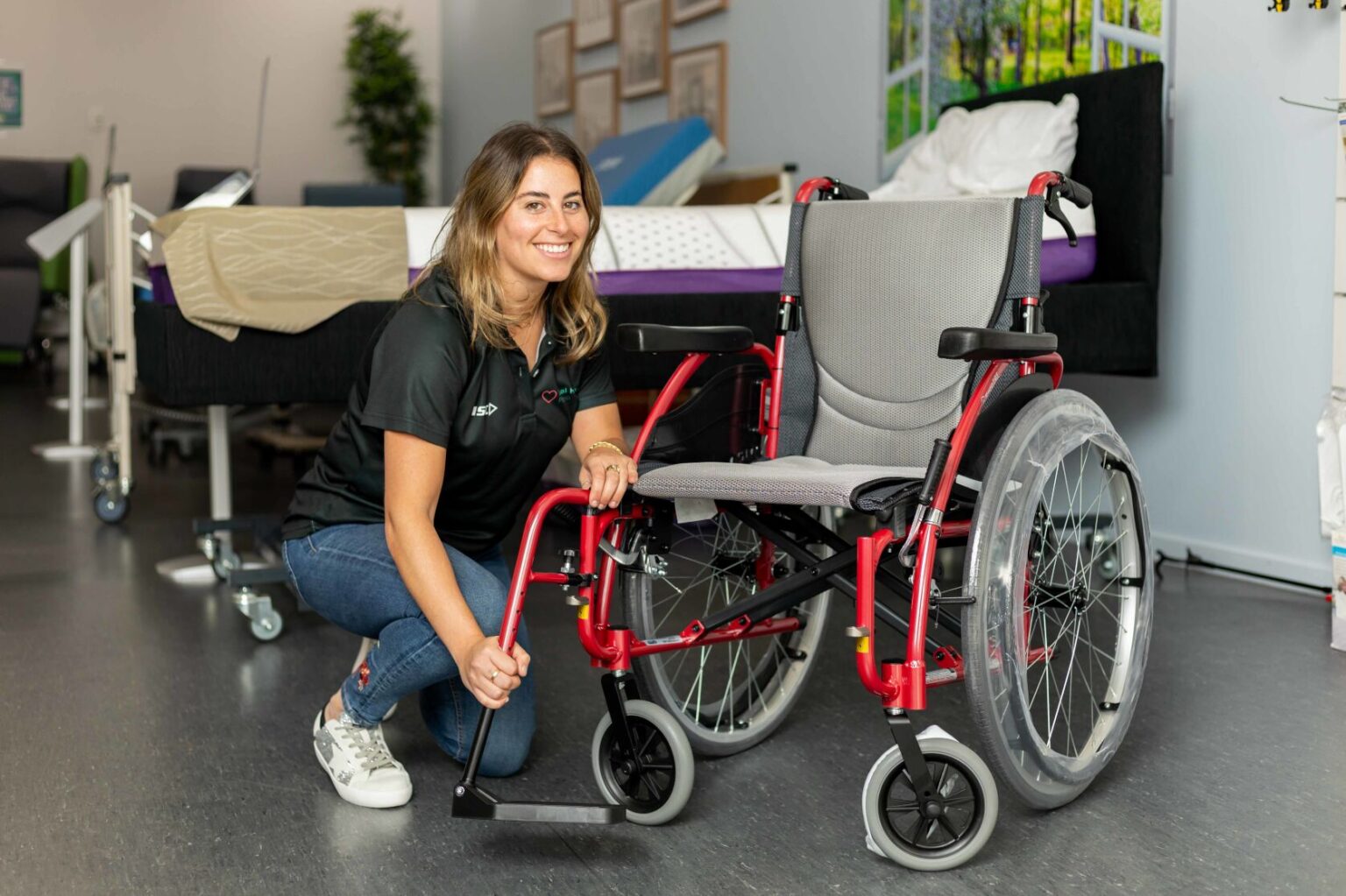
Our Occupational Therapists visit people at home to complete social, transport and home-environment assessments. This can include the prescription of equipment such as mobility scooters and wheelchairs.

We are also experienced in home modifications, including garage and ramp accessibility, so a person can safely store and access a mobility scooter at home.

Where you are interested in acquiring a scooter and working with a compassionate Occupational Therapist, contact Total Health Choice.

Make a Referral
  • Personalised equipment options

Customising a Mobility Scooter

A mobility scooter can be customised in different ways according to your preferences and clinical needs.

  • Backrests, headrests and armrests
  • Wheel size for different terrain
  • Footplates
  • Seat belts
  • Tray tables
  • Storage, security and the ability to conceal private items
  • Safety flags, lights and related safety features

Total Health Choice can work with your preferred equipment supplier, or recommend suitable suppliers, to customise the scooter around your needs.

  • Functional and environmental assessment

Assessing for a Mobility Scooter

Prescribing the correct scooter depends on the person’s needs and goals.

For NDIS participants, the scooter and relevant features, such as lights, may need to be justified as reasonable and necessary.

Our Occupational Therapist visits the person at home and assesses relevant activities of daily living, including mobility.

When considering a mobility scooter, we assess physical function, including the ability to transfer on and off the scooter. We also consider cognitive requirements, such as following instructions safely, understanding road signals, safety awareness and the ability to operate controls.

The home environment is also assessed. This may include ramps, internal accessibility, garage access and other assistive technology or modifications that may be helpful.


  • Scooter types and features

Types of Mobility Scooters

There are several types of mobility scooter. Common examples include:

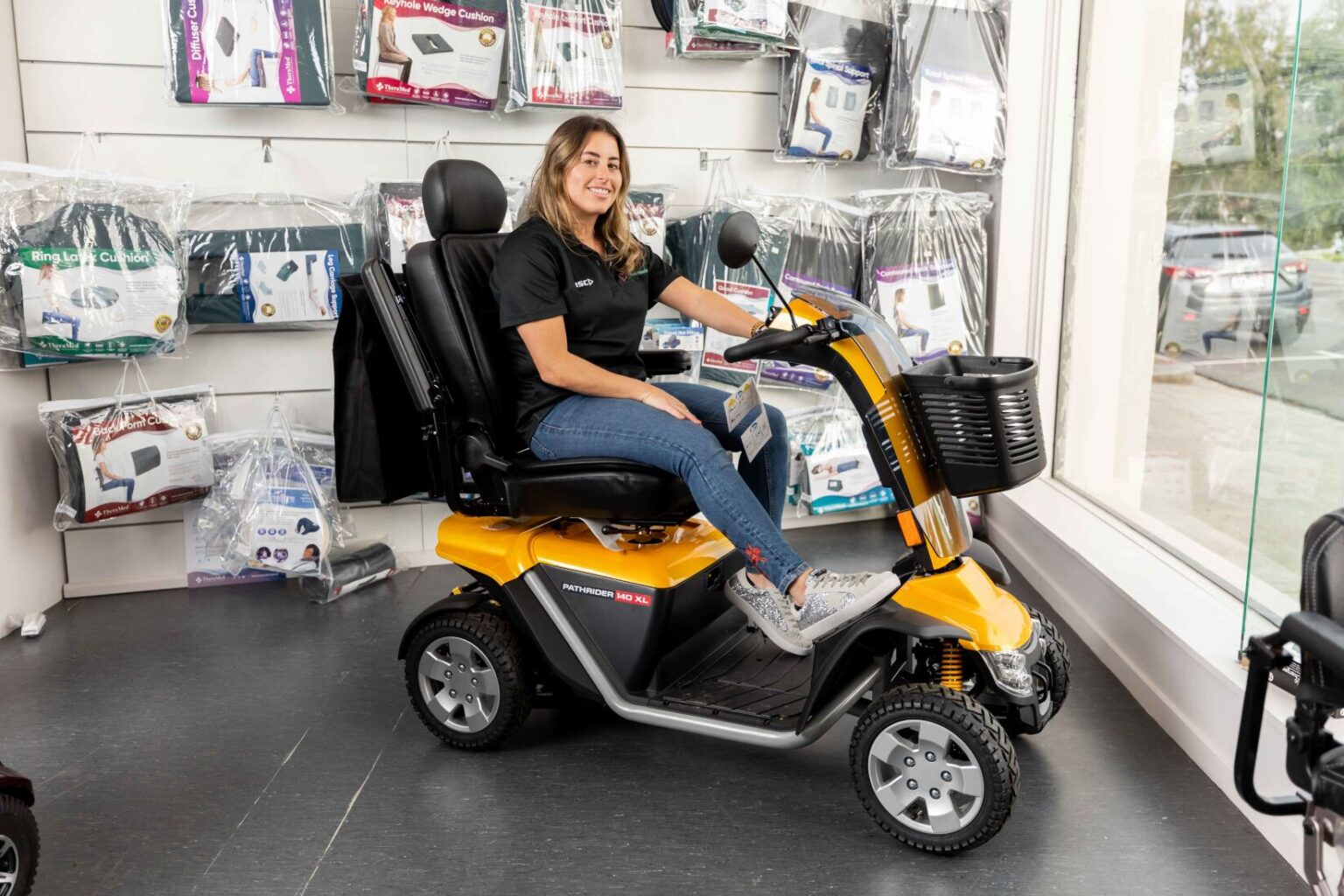
  • Four-wheel electric mobility scooters: Commonly used to support outdoor activities and social interaction. Their larger wheelbase can help manage more difficult terrain.
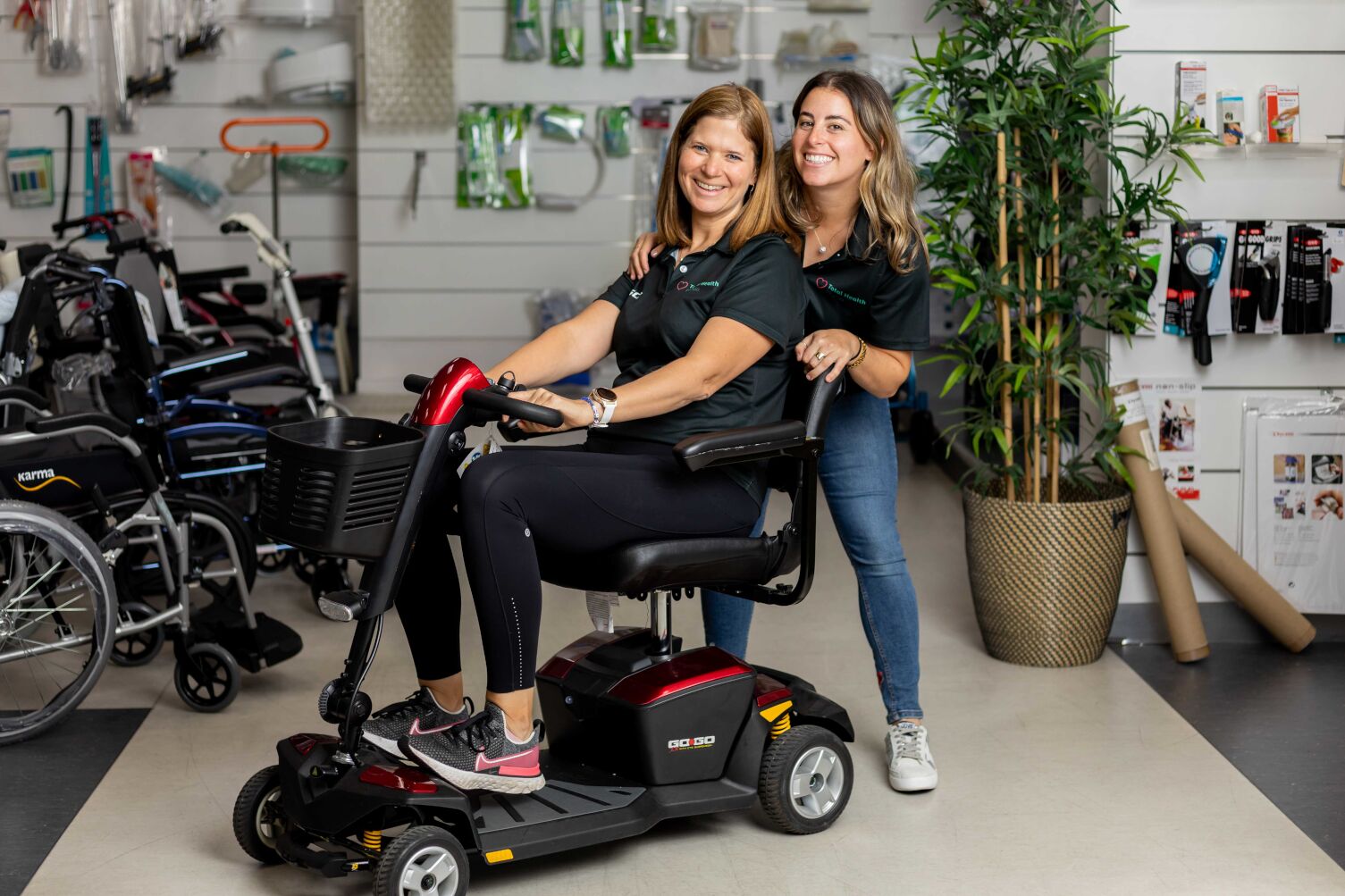
  • Three-wheel electric mobility scooters: Often provide more footrest space than four-wheel models. They are typically lighter, but may have less weight capacity.
  • Folding mobility scooters: Used where a person wishes to transport or store a scooter. Folding can be button-powered, although Total Health Choice rarely prescribes these due to increased weight and manual-handling considerations.

The source page notes that modern four-wheel scooters can have a turning circle similar to three-wheel models because of advances in technology.

  • Choosing the right mobility option

Difference Between a Wheelchair and Scooter Prescription

The difference between prescribing an electric wheelchair and a scooter depends on the person’s needs.

The primary advantage of a scooter is that it is designed for long-distance, outdoor use. The source content notes that scooters can travel more than 25 kilometres on average.

Scooters typically have a longer wheelbase, which can make them more stable at higher speeds. The trade-off is a wider turning circle when compared with an electric wheelchair, which may be able to rotate in place.

A scooter uses handlebars, requiring enough upper-limb function to steer and operate the controls. An electric wheelchair typically uses a joystick.

Where appropriate, a person may be prescribed both mobility options depending on their requirements and preferences.

  • Trust, compassion and care

Ready to Enquire About a Mobility Scooter Assessment?

  • Our office is staffed by caring Australian team members
  • Our Occupational Therapists are university trained, insured and registered with AHPRA
  • We visit your Melbourne home, helping save time and reduce travel requirements
  • We complete a holistic assessment, including other concerns you may wish to discuss

For healthcare delivered with trust, compassion and care, contact Total Health Choice.

Contact Us Make a Referral
  • Mobility scooter questions

Mobility Scooter FAQ

Total Health Choice supports choice and control in relation to scooter decisions and brand preference.

Importantly, our focus is on prescribing the correct item to meet clinical needs and provide a positive experience.

In many cases, a client may not yet know which option they want. We can work with them to match their needs and trial several models before purchasing the scooter.

Depending on the participant’s plan type, we may use an NDIS-registered equipment supplier.

There are many equipment suppliers across Melbourne. Total Health Choice can recommend suppliers based on a strong level of service, but the final choice remains with the client.

Total Health Choice is NDIS registered and a Home Care approved provider, so we can support clients with funding requests or questions.

Timeframes can vary.

The source page estimates that Total Health Choice assessment and request preparation can take between two and four weeks. NDIS approval may take longer, ranging from one month to one year.

Total Health Choice can help prioritise urgent cases and may recommend other options, such as hiring, where appropriate.

  • Mobility scooter support

Need Help Exploring Mobility Scooter Options?

Speak with Total Health Choice about a home-based Occupational Therapy assessment, mobility scooter trial and practical prescription support.

  • Home, transport and community-mobility assessment
  • Scooter prescription tailored to functional needs
  • Supplier coordination and equipment trials
  • Support for NDIS and Home Care funding pathways
Make a Referral Contact Us